Properly storing your rubber hex dumbbell set is crucial for their longevity, safety, and maintaining an organized workout space. This involves selecting an appropriate storage solution like a dumbbell rack, controlling environmental factors such as temperature and humidity, and performing regular maintenance. By following these guidelines, your dumbbells can last for many years, ensuring a functional and appealing home gym environment.
Why Proper Storage is Crucial for Your Rubber Hex Dumbbells
Properly storing your rubber hex dumbbells extends beyond mere tidiness; it’s fundamental for safety, equipment longevity, and maintaining your workout space. Neglecting storage can lead to various issues, compromising your gym’s functionality and the lifespan of your valuable equipment.
Safety and Organization stand as primary benefits. Leaving dumbbells scattered across the floor creates a significant tripping hazard, potentially leading to injuries. A designated storage system ensures a clear, safe workout area, preventing accidents and making your gym more efficient. Beyond immediate safety, an organized space improves workout flow and motivation, allowing you to quickly find the weights you need.
Proper storage significantly extends the lifespan of your dumbbells. Rubber coatings, while durable, can degrade over time if exposed to harsh conditions, such as direct sunlight or extreme humidity, leading to cracking or softening. The metal handles are also susceptible to rust and corrosion if left in damp environments. Storing your dumbbells correctly protects these materials, maintaining their structural integrity and appearance. It also prevents premature wear and tear that can occur from dumbbells clanging against each other or being dropped unnecessarily.
Finally, proper storage preserves your workout space and its aesthetic. Rubber hex dumbbells are less likely to damage floors than bare metal ones, but dropping them or leaving them in high-traffic areas can still cause scuffs or dents. A dedicated rack elevates the dumbbells, protecting your flooring and reducing noise during workouts. A tidy gym also creates a more inviting and professional atmosphere, whether it’s a corner in your living room or a dedicated garage space.
Choosing the Right Storage Solution for Your Rubber Hex Dumbbell Set
Selecting the ideal storage solution is paramount for keeping your rubber hex dumbbells organized, accessible, and in excellent condition. While various options exist, some are distinctly better suited for the unique shape and material of hex dumbbells.
Dumbbell racks are widely considered the gold standard for dumbbell storage. They are designed to keep weights off the floor, preventing damage and maintaining order. For home gyms with a substantial collection, tiered racks (like 2-tier or 3-tier horizontal designs) offer ample space, accommodating numerous pairs of dumbbells. These racks provide excellent stability and allow for easy access to a range of weights. Horizontal designs are particularly effective for hex dumbbells, as their flat trays or rails cradle the hexagonal heads securely, preventing rolling.
If space is a premium in your home gym, vertical or A-frame racks are an exceptional choice. These compact units are designed to store multiple pairs of dumbbells in a small footprint, often holding 8-10 pairs without taking up much floor area. They are perfect for smaller collections or for those who need to maximize every square inch. Slanted shelves, often found on higher-quality racks, improve ergonomics by making it easier to pick up and return dumbbells, reducing strain.
For those with limited floor space, wall-mounted storage solutions offer an ingenious way to utilize vertical space. These systems attach directly to your wall, keeping dumbbells completely off the ground. They can be particularly useful for kettlebells and certain dumbbell types, though it’s crucial to ensure the wall structure can support the weight and that the mounting is secure.
Finally, considering DIY storage can be a cost-effective and customizable approach. Many home gym enthusiasts construct their own racks from wood or steel, tailoring the design to their specific dumbbell set and available space. This allows for personalized solutions that might not be available commercially. However, ensure any DIY rack is structurally sound and safe before loading it with weights. If a dedicated rack isn’t immediately an option, storing dumbbells on a flat, level surface in a low-traffic area can be a temporary solution, but always prioritize stability to prevent rolling or falling.
Key Factors When Selecting a Dumbbell Storage System
Choosing the right storage system for your rubber hex dumbbell set involves more than just picking the first rack you see. Several critical factors should influence your decision to ensure safety, efficiency, and long-term satisfaction. Thoughtful consideration here will prevent future frustrations and protect your investment.
First and foremost is your available space. Before even looking at models, measure your floor area, including width, depth, and ceiling height. A 2-tier rack might fit perfectly in one corner, while a vertical A-frame rack could be better for a narrow space. to account for clearance around the rack, allowing comfortable and safe retrieval of dumbbells without bumping into walls or other equipment. Taller racks, while offering more capacity, might feel overwhelming or impractical in rooms with standard ceiling heights.
Next, assess your weight capacity and set size. Consider both your current dumbbell collection and any potential future expansions. A rack that barely holds your existing weights might quickly become inadequate. Opt for a system that can comfortably support the total weight of your dumbbells and has enough tiers or slots for all your pairs, even if you plan to add more over time. Overloading a rack beyond its designed capacity poses a significant safety hazard and can lead to premature wear or structural failure.
The material and construction of the storage system are also vital. Look for racks made from robust materials like heavy-gauge steel, which offer superior durability and stability. The design should feel sturdy, with secure welding or bolted connections. For rubber hex dumbbells, ensure the rack’s trays or saddles are designed to accommodate the hexagonal shape, preventing them from rolling or shifting. Flat trays or rail racks are typically excellent for this purpose.
Finally, budget and aesthetics play a role. Dumbbell racks come in a wide range of price points. While it’s tempting to opt for the cheapest option, investing in a quality rack will pay dividends in safety and longevity. Consider how the rack will look in your space – a well-designed, sturdy rack can enhance the overall aesthetic of your home gym. Balancing cost with the desired quality and look will lead to a storage solution that is both functional and visually appealing.
Environmental Considerations for Rubber Hex Dumbbell Longevity
The environment in which you store your rubber hex dumbbell set plays a significant role in their longevity and condition. Rubber, metal, and coatings are all susceptible to degradation from unfavorable atmospheric conditions, making strategic placement and environmental control essential.
One of the most critical factors is temperature and humidity. Rubber can soften, become sticky, or even crack when exposed to extreme heat or cold. High humidity is particularly detrimental, as it can accelerate the degradation of the rubber coating and, more importantly, cause the metal handles to rust and corrode. Damp environments, such as uninsulated garages or basements, or areas near radiators, should be strictly avoided. The ideal storage environment is a cool, dry place with consistent temperatures, which helps maintain the material integrity of both the rubber and metal components.
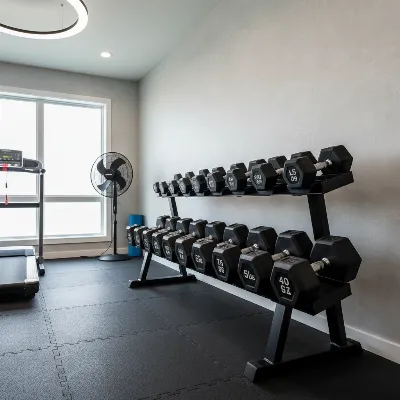 Rubber hex dumbbells stored neatly on a rack in a cool, dry, well-ventilated home gym space, away from direct sunlight
Light exposure, specifically direct sunlight, is another enemy of rubber. Prolonged exposure to UV rays can cause the rubber to dry out, fade, and become brittle, leading to premature cracking and deterioration. Always store your dumbbells away from windows or in areas where they will not be subjected to direct sunlight for extended periods. If your gym space receives a lot of natural light, consider using blackout curtains or positioning your storage rack strategically to minimize exposure.
Ensuring adequate ventilation is also important. A well-ventilated area helps dissipate any lingering rubber odors from new dumbbells (known as off-gassing) and prevents moisture from accumulating, which can be a problem in enclosed spaces. Good airflow helps maintain a dry environment, preventing the conditions that lead to rust and rubber degradation. If you live in a particularly humid climate, investing in a dehumidifier for your gym space can be a wise decision to protect your equipment and create a more comfortable workout environment.
> “The biggest mistake people make is underestimating the power of environmental factors. A consistent cool, dry, and shaded storage spot can add years to your dumbbells’ life.” – Alex Stone, Head Technician at GymGear Pro
Maintaining Your Rubber Hex Dumbbells and Storage System
Beyond proper placement, regular maintenance is key to ensuring your rubber hex dumbbells and their storage system remain in top condition, functioning safely and looking good for years of use. A simple routine can prevent a host of problems and save you from costly replacements.
Regular cleaning is essential to remove sweat, dirt, oils, and any chalk residue that can accumulate on your dumbbells. After each workout, a quick wipe-down with a clean, damp cloth is beneficial. For a more thorough cleaning, mix a small amount of mild dish soap with warm water. Dip a soft cloth or microfiber towel into the solution, wring out excess moisture, and gently wipe down the rubber heads and metal handles. It’s crucial to avoid harsh chemicals, abrasive cleaners, or stiff brushes, as these can damage the rubber coating or metal finish. After cleaning with soap, wipe the dumbbells again with a clean, water-dampened cloth to remove any soap residue, then immediately dry them thoroughly with a fresh towel. This prevents moisture from lingering and causing rust on the handles or degrading the rubber.
Inspecting for wear and damage should be a routine practice. Periodically examine the rubber coating for any signs of cracking, peeling, or significant wear. Check the metal handles for rust, corrosion, or any loosening from the dumbbell heads. For your storage rack, regularly check all bolts and connections to ensure they remain tight and secure. Loose bolts can compromise the rack’s stability and lead to accidents. Addressing these issues promptly can prevent minor problems from escalating into major damage or safety hazards.
Protecting your floors is another crucial aspect of maintenance, even with rubber hex dumbbells. While their coating offers protection, repeatedly dropping heavy dumbbells can still cause damage or leave marks. Consider placing durable gym mats or rubber flooring beneath your workout area and especially under your dumbbell rack. These mats absorb impact, reduce noise, and add an extra layer of stability to your storage system, preventing the rack from shifting or scratching the floor.
Finally, proper handling during workouts contributes significantly to dumbbell longevity. While rubber hex dumbbells are designed to be durable, avoiding unnecessary dropping or throwing them on hard surfaces will extend their life. Always use controlled movements when putting them down, especially heavier weights. Using dumbbells on appropriate surfaces, like gym mats, further minimizes wear and tear on both the weights and your flooring. Some experts also recommend occasionally rotating your dumbbells (if you have multiple pairs of the same weight) to ensure even wear, though this is less critical for fixed rubber hex dumbbells than for adjustable or round-headed varieties.
Common Storage Mistakes to Avoid
Even with the best intentions, certain storage practices can inadvertently shorten the lifespan of your rubber hex dumbbell set or create safety issues. Being aware of these common mistakes can help you maintain a safe, efficient, and well-preserved home gym.
The most prevalent mistake is leaving dumbbells on the floor. While convenient in the moment, scattered weights are a major tripping hazard, especially in a busy home environment. Beyond safety, leaving dumbbells on the floor can lead to scuffs and damage to your flooring, and the dumbbells themselves may get kicked, stepped on, or rolled, causing premature wear and tear to the rubber coating and metal handles. A dedicated storage solution, like a rack, is always the best practice to keep your floor clear and your equipment safe.
Storing dumbbells in inappropriate environments is another frequent error. As discussed, extreme temperatures, direct sunlight, and high humidity are detrimental to both rubber and metal. Storing your rubber hex dumbbells in a damp garage, a sun-baked patio, or directly next to a heat source can cause the rubber to crack, fade, or become sticky, and the metal handles to rust. Always opt for a cool, dry, well-ventilated indoor space to protect your investment.
Overloading storage racks can lead to serious safety concerns and damage to the rack itself. Every dumbbell rack has a specified weight capacity. Exceeding this limit can cause the rack to warp, buckle, or even collapse, potentially damaging your dumbbells, flooring, and causing injury. Always ensure your rack is rated to handle the total weight of your dumbbell set, with a little extra capacity for safety. If your collection grows significantly, invest in a larger or additional rack rather than pushing the limits of your current one.
Lastly, ignoring regular maintenance will inevitably shorten your dumbbells’ lifespan. Neglecting to clean off sweat and dirt allows grime to build up, which can degrade the rubber over time. Skipping periodic inspections means you might miss early signs of rust or damage, allowing minor issues to become irreversible. Consistent care, as outlined in the previous section, is not optional but a fundamental part of responsible equipment ownership.
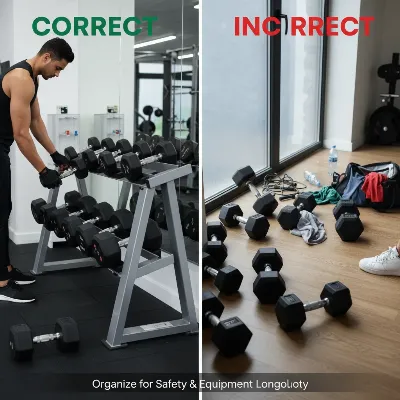 Person carefully placing rubber hex dumbbell onto a proper rack, highlighting correct storage practices versus incorrect methods
Conclusion
Properly storing your rubber hex dumbbell set is a commitment that pays dividends in safety, organization, and the extended life of your fitness equipment. By understanding the optimal storage solutions, considering environmental factors, and adhering to a simple maintenance routine, you can ensure your dumbbells remain in excellent condition for many years of effective workouts.
Investing in a suitable dumbbell rack – whether a multi-tiered, vertical, or wall-mounted design – is the cornerstone of good storage. This not only keeps your workout space tidy and accident-free but also protects your flooring and the dumbbells themselves from unnecessary wear. Equally important is placing your set in a cool, dry, well-ventilated area, shielded from direct sunlight and excessive humidity, which are primary culprits in material degradation. Regular cleaning and inspection further safeguard your investment, allowing you to address minor issues before they become significant problems.
By avoiding common pitfalls like leaving dumbbells scattered or storing them in adverse conditions, you cultivate a functional, safe, and aesthetically pleasing home gym. Responsible care for your rubber hex dumbbells means more enjoyable and effective training sessions, ensuring your equipment is always ready when you are. What’s your biggest challenge in keeping your home gym organized and your equipment in top shape?
Frequently Asked Questions
How often should I clean my rubber hex dumbbells?
|
Our Picks for the Best Dumbbell Set in 2026
As an Amazon Associate I earn from qualifying purchases.
|
||
| Num | Product | Action |
|---|---|---|
| 1 | Adjustable Dumbbells Set of 2,Free Weights Dumbbells Set,Adjustable Dumbbell Set,52.5 lbs pair 105 lbs,15 in 1,for Men/Women Gym Equipment for Home Strength Training Equipment |

|
| 2 | Adjustable dumbbell set,20/35/45/55/70/90lbs Free Weights set with upgraded nut, 5 in 1 Weight Set Used as Kettlebells, Barbell, Push up Stand, Fitness Exercise for Home Gym Suitable Men/Women |
|
| 3 | Fitvids Set of 6 Neoprene Dumbbell Hand Weights, Set with Rack: 2/3/5 Pairs |
|
| 4 | PowerBlock Elite EXP Adjustable Dumbbells, Sold in Pairs, Stage 1, 5-50 lb. Dumbbells, Durable Steel Build, Innovative Workout Equipment, All-in-One Dumbbells, Expandable with Expansion Kits |
|
| 5 | CAP Barbell 150 LB Coated Hex Dumbbell Weight Set with Vertical Rack | Multiple Options |
|
| 6 | Amazon Basics Neoprene Dumbbell Hand Weights for Exercise and Muscle Toning |
|
| 7 | Adjustable Dumbbells, 20/30/45/70/90lbs Free Weight Set with Connector,5 in1 Dumbbells Set Used as Barbell,Kettlebells,Push up Stand,Fitness Exercises for Home Gym Suitable Men/Women |
|
| 8 | Amazon Basics Neoprene Dumbbell Hand Weights for Exercise and Muscle Toning |
|
| 9 | Adjustable Dumbbell Set, 20/33/45/70/90lbs Free Weight Set with Connector, 4 in1 Dumbbells Set Used as Barbell, Kettlebells, Push up Stand, Weight Set for Home Gym Suitable Men/Women |
|
| 10 | Amazon Basics Neoprene Dumbbell Hand Weights for Exercise and Muscle Toning |
|
It is recommended to wipe down your rubber hex dumbbells with a damp cloth after each use to remove sweat and dirt. For a deeper clean, use a mild soap and water solution weekly or bi-weekly, ensuring they are thoroughly dried afterward to prevent rust and rubber degradation.
Can I store rubber hex dumbbells outside?
No, it is generally not recommended to store rubber hex dumbbells outside. Exposure to direct sunlight, extreme temperatures, rain, and high humidity can cause the rubber to crack or deteriorate and the metal handles to rust, significantly shortening their lifespan.
Do I really need a dumbbell rack for hex dumbbells?
While hex dumbbells are stable and won’t roll, a dedicated rack is highly recommended. A rack prevents tripping hazards, organizes your weights, protects your flooring, and helps maintain the dumbbells’ condition by keeping them off potentially damp or abrasive surfaces.
What should I do if my rubber dumbbells start to smell?
New rubber dumbbells may have an initial “off-gassing” odor, which usually dissipates over time. To help reduce the smell, clean them with a mild soap and water solution, then air them out in a well-ventilated area. Ensure good airflow in your storage space to prevent odors from lingering.
How can I protect my floor from heavy rubber hex dumbbells?
To protect your floors, use a sturdy dumbbell rack to keep the weights elevated. Place heavy-duty gym mats or rubber flooring in your workout area and under the rack. These absorb impact, reduce noise, and provide an extra layer of protection against scuffs or dents, even from rubber-coated weights.
How to Properly Store Your Rubber Hex Dumbbell Set
Proper storage of rubber hex dumbbells ensures their longevity, maintains gym safety, and keeps your workout space organized. Follow these steps to protect your investment.
Select a dumbbell rack that fits your space and dumbbell collection. Options include tiered horizontal racks for larger sets, vertical A-frame racks for compact spaces, or wall-mounted solutions for limited floor area. Ensure the rack is made from heavy-gauge steel and can support the total weight of your dumbbells.
Store your dumbbells in a cool, dry, and well-ventilated indoor area. Avoid direct sunlight, extreme temperatures, and high humidity, as these can degrade rubber and cause metal handles to rust. Consider a dehumidifier if you live in a humid climate.
Wipe down dumbbells with a damp cloth after each use to remove sweat. For a deeper clean, use a mild soap and water solution weekly, then thoroughly dry them immediately. Avoid harsh chemicals that can damage the rubber coating or metal finish.
Periodically check the rubber coating for cracks or wear, and inspect metal handles for rust or loosening. For your rack, ensure all bolts and connections are tight and secure. Addressing minor issues promptly prevents larger problems and safety hazards.
Place durable gym mats or rubber flooring under your workout area and dumbbell rack to absorb impact and reduce noise. Always use controlled movements when putting down dumbbells, especially heavier weights, to minimize wear and tear on both the equipment and your flooring.
Equipment that holds up past 60 sessions
Practical specs, not advice. Unsubscribe anytime.

I’ve had my rubber hex set for years, and I always just assumed they’d last forever without much thought. The point about how neglecting storage can compromise functionality really hit home. I’m definitely going to be more diligent about keeping them on their rack and doing regular checks. It’s worth the effort to protect my investment.
This was a good reminder about environmental factors. I live in a pretty humid area, and I hadn’t really thought about how that could affect my rubber hex dumbbells over time. I’ve started using a small dehumidifier in my garage gym, and I’m hoping it helps keep them in better shape. It’s a small change but seems important for longevity.
I appreciate the tips on regular maintenance for rubber hex dumbbells, especially wiping them down. I’m pretty good about keeping my equipment clean, but I wish there were more specific recommendations for cleaning products. Sometimes I’m not sure what’s safe to use without damaging the rubber. Overall, good advice though.
I used to just leave my rubber hex dumbbells on the floor, and it was a total mess and a tripping hazard. After reading about the importance of a proper dumbbell rack, I invested in a 3-tier rack, and it’s made such a difference. My gym space looks so much cleaner and more professional now. Plus, I feel a lot safer not having them scattered everywhere.