Adjustable dumbbell sets should generally not be dropped, even on protective mats, because their intricate internal mechanisms are vulnerable to damage from impact. While high-density rubber mats protect floors and reduce noise, they do not fully absorb the shockwaves that can dislodge pins, crack plastic components, or bend internal structures within the dumbbells. This can lead to equipment failure, safety hazards, and voided warranties.
Understanding Adjustable Dumbbell Mechanics and Vulnerabilities
Adjustable dumbbells revolutionized home fitness by consolidating multiple weights into a single, compact unit. However, this innovative design comes with inherent differences that distinguish them sharply from their traditional, fixed-weight counterparts, especially when it comes to durability against impact.
Fixed vs. Adjustable: A Design Divergence
Fixed dumbbells are typically solid, single-piece constructions, often cast from iron or steel, sometimes coated in rubber or urethane. Their robust, monolithic design means they are built to endure significant impact and can frequently be dropped without immediate structural failure. In contrast, adjustable dumbbells, whether dial, selector pin, or spin-lock models, achieve their versatility through intricate internal mechanisms. These systems allow users to quickly change weights, but they introduce multiple moving parts and connection points that are fundamentally less resilient to sudden shock than a solid piece of metal.
The Achilles’ Heel: Plastic Components and Locking Systems
Many adjustable dumbbell designs, particularly those focused on affordability or quick adjustments, incorporate plastic components in critical areas. These can include the weight selection dials, the cradles where the handle rests, internal weight selectors, the mechanisms connecting the plates to the handle, and even the outer casings of the weight plates themselves. While modern plastics are durable, they are not impervious to the stress of a drop. Impact can cause these plastic elements to crack, shatter, or deform, leading to misalignment or complete failure of the weight selection or locking system. The metal locking mechanisms, while seemingly robust, can also bend, warp, or seize when subjected to the high forces generated by a drop, compromising the dumbbell’s ability to securely hold its plates.
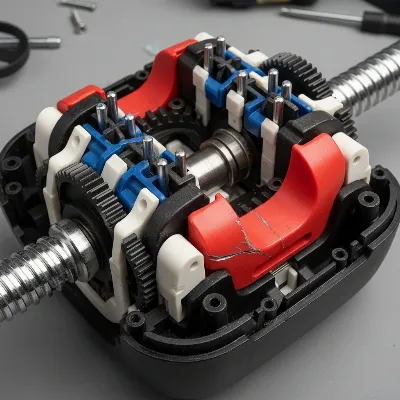 Adjustable dumbbell showing intricate internal mechanisms and plastic parts susceptible to damage.
The Harsh Reality of Dropping Adjustable Dumbbells
The allure of dropping weights after a grueling set is understandable, but for adjustable dumbbells, this action carries significant risks that extend far beyond mere cosmetic damage. Ignoring these risks can lead to immediate equipment failure and potential injury.
Beyond Surface Scratches: Internal Damage
Unlike their fixed counterparts, adjustable dumbbells are engineered with precision-fit components that allow for seamless weight changes. When an adjustable dumbbell is dropped, especially from any significant height, the force of the impact can violently jolt these internal parts. This trauma can cause plates to shift out of alignment, critical locking pins to bend, or delicate plastic gears to strip. Even a single hard impact can compromise the intricate locking mechanisms, increasing the future risk of plates detaching unexpectedly during subsequent lifts. Manufacturers are clear on this point: treat them as “set down” equipment, not “drop” equipment.
Safety Hazards and Warranty Implications
|
Our Picks for the Best Dumbbell Set in 2026
As an Amazon Associate I earn from qualifying purchases.
|
||
| Num | Product | Action |
|---|---|---|
| 1 | CAP Barbell 150 LB Coated Hex Dumbbell Weight Set with Vertical Rack | Multiple Options |

|
| 2 | Adjustable Dumbbell Set, 20/33/45/70/90lbs Free Weight Set with Connector, 4 in1 Dumbbells Set Used as Barbell, Kettlebells, Push up Stand, Weight Set for Home Gym Suitable Men/Women |
|
| 3 | Adjustable dumbbell set,20/35/45/55/70/90lbs Free Weights set with upgraded nut, 5 in 1 Weight Set Used as Kettlebells, Barbell, Push up Stand, Fitness Exercise for Home Gym Suitable Men/Women |
|
| 4 | Amazon Basics Neoprene Dumbbell Hand Weights for Exercise and Muscle Toning |
|
| 5 | PowerBlock Elite EXP Adjustable Dumbbells, Sold in Pairs, Stage 1, 5-50 lb. Dumbbells, Durable Steel Build, Innovative Workout Equipment, All-in-One Dumbbells, Expandable with Expansion Kits |
|
| 6 | Fitvids Set of 6 Neoprene Dumbbell Hand Weights, Set with Rack: 2/3/5 Pairs |
|
| 7 | Adjustable Dumbbells Set of 2,Free Weights Dumbbells Set,Adjustable Dumbbell Set,52.5 lbs pair 105 lbs,15 in 1,for Men/Women Gym Equipment for Home Strength Training Equipment |
|
| 8 | Amazon Basics Neoprene Dumbbell Hand Weights for Exercise and Muscle Toning |
|
| 9 | Adjustable Dumbbells, 20/30/45/70/90lbs Free Weight Set with Connector,5 in1 Dumbbells Set Used as Barbell,Kettlebells,Push up Stand,Fitness Exercises for Home Gym Suitable Men/Women |
|
| 10 | Amazon Basics Neoprene Dumbbell Hand Weights for Exercise and Muscle Toning |
|
The integrity of an adjustable dumbbell’s locking system is paramount for user safety. A damaged mechanism could lead to weight plates disengaging mid-exercise, posing a severe risk of injury to the user or anyone nearby. Imagine a heavy plate falling during an overhead press or a chest press – the consequences could be catastrophic. Beyond immediate danger, the vast majority of adjustable dumbbell manufacturers explicitly state that damage resulting from dropping or negligent use will void the product warranty. This means that if your adjustable dumbbells break due to being dropped, you will likely be responsible for the full cost of repair or replacement, turning an initial investment into a potentially much larger expense. Many warranties specifically exclude “damage caused to product due to negligent or faulty use… Negligent or faulty use includes dropping of the product.”
“Adjustable dumbbells are engineering marvels for space-saving, but their complexity makes them far more fragile than solid weights. A single drop can be the difference between a functional tool and a pile of broken parts.” – Dr. Elena Petrova, Sports Biomechanics Specialist
Mats: A Shield for Floors, Not a Force Field for Dumbbells
When equipping a home gym, protective mats are often among the first considerations. They are vital for creating a safe and durable workout environment, but their protective capabilities have specific limitations when it comes to adjustable dumbbells.
The Primary Role of Gym Mats
Gym mats, particularly those made from high-density rubber, serve multiple crucial functions. Their primary purpose is to safeguard your subfloor (whether concrete, wood, or tile) from scratches, dents, and cracks caused by heavy equipment and incidental impacts. They also play a significant role in noise reduction, absorbing the sound of weights being set down and mitigating vibrations. A good gym mat provides a stable, non-slip surface, enhancing grip during dynamic movements and improving overall workout safety and comfort.
The Limits of Mat Protection for Adjustable Dumbbells
While mats excel at protecting your floor, they offer only limited protection to the intricate internal mechanisms of adjustable dumbbells against the force of a drop. A mat can cushion the exterior impact and prevent damage to the floor underneath, but it cannot fully absorb the shockwaves that travel through the dumbbell itself, which are responsible for dislodging pins, cracking plastic components, or bending internal structures. Even thick, commercial-grade rubber mats are designed to absorb vertical impact for floor protection and general noise dampening, not to render a delicate, multi-part adjustable dumbbell “drop-proof.” Foam mats, often thinner and less dense, offer even less protection against impact and are generally unsuitable for heavy weights or any dropping scenarios.
Choosing the Right Mat (for General Protection, Not Dropping)
For a home gym utilizing adjustable dumbbells, selecting the appropriate mat is still crucial for floor protection and a stable workout surface. Opt for dense, heavy-duty rubber mats. Interlocking rubber tiles or rolled rubber flooring are excellent choices, offering superior shock absorption and durability compared to thinner foam alternatives. For areas where dumbbells will be carefully set down, a thickness of 3/8″ to 1/2″ is generally sufficient. If you anticipate any accidental, low-height set-downs (which should still be avoided as much as possible with adjustable dumbbells), considering mats up to 3/4″ thick, like recycled rubber horse stall mats, can provide maximum floor protection and noise dampening. Prioritize high-density materials to ensure a stable base that won’t feel “spongy” underfoot.
Best Practices for Longevity and Safety
Given the inherent vulnerabilities of adjustable dumbbells, adopting careful handling and maintenance routines is not just advisable—it’s essential for ensuring their longevity and, more importantly, your safety.
Mastering the Controlled Set-Down
The single most effective way to prevent damage to your adjustable dumbbells is to master the controlled set-down. Rather than letting gravity take over at the end of a set, consciously lower the weights back to their resting position. Aim to keep the dumbbell level, placing both ends gently and simultaneously onto your protected floor or cradle. Avoid tipping the dumbbell or allowing one end to strike first, as this creates uneven stress on the internal components. If you find yourself unable to control the weight through the full range of motion, including a gentle set-down, it’s a clear indicator that you might be lifting too heavy. Prioritizing proper form and weight selection over ego lifts will protect both you and your equipment.
Pre-Workout Safety Checks
A quick safety check before each workout can proactively identify potential issues and prevent accidents. Before lifting, ensure that the locking mechanism is fully engaged and seated correctly. For dial systems, confirm the weight selection matches the display and listen for a reassuring “click.” With selector pin models, visually verify that the pin is fully inserted and flush. A light “tug test” can confirm that the plates are securely locked to the handle. Also, inspect the dumbbell for any visible cracks, loose parts, or signs of misalignment. This minute-long routine is a small investment of time that offers significant peace of mind.
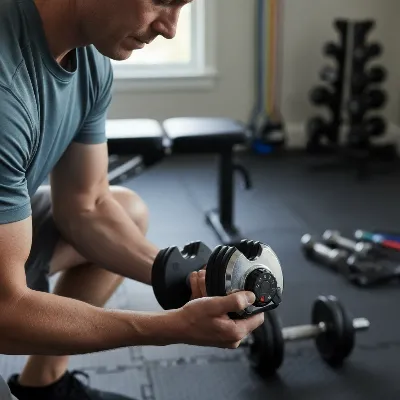 Person performing a pre-workout safety check on an adjustable dumbbell, inspecting the locking mechanism.
Regular Maintenance and Storage
Consistent maintenance and proper storage are vital for extending the lifespan of your adjustable dumbbells. After each use, wipe down the handles with a slightly damp cloth to remove sweat and dirt, which can degrade grip material over time. Store your dumbbells in a dry, temperature-controlled environment, away from extreme heat or cold, which can affect material integrity. Periodically, inspect for any loose screws, bolts, or collars and tighten them as needed, consulting your manufacturer’s manual for specific guidance. If you notice any unusual rattling sounds during use or when setting them down, investigate immediately. Loose plates or internal components are a sign that the dumbbell may need repair or closer inspection before further use. Proactive care ensures your equipment remains safe and functional for years.
“Treat your adjustable dumbbells like precision instruments, not brute force tools. Their intricate design requires respect to deliver years of reliable performance.” – Mark T., Certified Strength & Conditioning Specialist and Home Gym Advisor
Conclusion
The convenience and versatility of adjustable dumbbell sets make them an indispensable asset for many home gyms. However, the critical question of whether you can safely drop them on mats is met with a resounding caution: generally, no. While high-density rubber mats excel at protecting your floors and dampening noise, they do not inherently safeguard the complex internal mechanisms of adjustable dumbbells from the detrimental forces of a drop. Such impacts can lead to irreversible damage, compromise safety, and void your warranty.
To ensure both your safety and the longevity of your investment, embrace a philosophy of controlled handling. Prioritize careful, level set-downs, perform routine pre-workout safety checks, and adhere to regular maintenance practices. By respecting the engineered design of these sophisticated fitness tools, you can avoid costly damage and ensure they remain a reliable part of your strength training regimen for years to come. By adopting these mindful practices, how much longer can your adjustable dumbbell sets truly last, and what new gains will you unlock?
Frequently Asked Questions
Equipment that holds up past 60 sessions
Practical specs, not advice. Unsubscribe anytime.

I absolutely love my adjustable dumbbells! The compact unit design is a game-changer for my small home gym. I’ve always been careful with my equipment, but the explanation about how different they are from traditional fixed dumbbells in terms of impact durability really drove the point home. It’s good to know why being gentle is so important to avoid voiding the warranty.
These adjustable sets are super convenient, no doubt. I appreciate the point about how even high-density rubber mats don’t fully absorb the shockwaves. I’ve noticed a slight rattle in one of mine after a few accidental drops, which makes me a bit nervous about potential damage to the pins. Wish they were a bit more robust for those occasional slips.
I’ve been using my adjustable dumbbells for a few months now and they’re fantastic for saving space. I was definitely guilty of dropping my old fixed-weight dumbbells, so the reminder about the internal mechanisms being vulnerable was really helpful. I’m making a conscious effort to set them down gently now, even on my thick rubber mat. It’s a small change but worth it to protect my investment.