A stuck adjustment dial on adjustable dumbbells can often be fixed by systematically checking for misalignment, clearing debris, and resetting the internal mechanism. This common issue, which can halt workouts, typically stems from misaligned weight plates, accumulated dust or sweat, or internal component problems. Most stuck dials can be resolved with careful troubleshooting, ensuring your adjustable dumbbells remain functional for your fitness routine.
Understanding Why Your Dumbbell Dial Gets Stuck
Before diving into fixes, it’s helpful to understand the common culprits behind a stuck dial. Identifying the root cause can streamline your troubleshooting process and prevent future issues.
Misalignment Issues
One of the most frequent reasons for a dial to get stuck is the misalignment of weight plates or the handle itself. If a plate is not seated correctly in its slot, or if the handle is not fully engaged with the plate mechanism, the internal locking pins cannot retract or engage properly, thus preventing the dial from turning. This often occurs if the dumbbell is dropped or returned to its base carelessly. For best home roundups on this site.
Debris and Obstructions
Over time, dust, dirt, sweat, and other small debris can accumulate within the intricate adjustment mechanisms, the base, or between the weight plates. This build-up acts as a physical barrier, jamming the delicate moving parts and making it impossible for the dial to rotate freely. Regular cleaning is crucial to prevent this. “Even a tiny spec of dust can disrupt the complex gearing of adjustable dumbbells,” notes fitness equipment specialist, Sarah Jenkins.
Internal Mechanism Problems
Adjustable dumbbells rely on a system of locking pins, gears, or selector tabs to engage and disengage weight plates. If any of these internal components become bent, broken, or simply out of sync due to wear and tear or manufacturing inconsistencies, the dial will lose its ability to move smoothly. This can sometimes be a manufacturer-specific issue, with some models having known vulnerabilities.
Wear and Tear
Like any piece of frequently used equipment, adjustable dumbbells are subject to wear and tear. Constant use can cause components to degrade, especially plastic parts or the finish on metal plates. Worn-out locking tabs, softened grip material, or general loosening of components can lead to a sticky or completely stuck dial.
Step-by-Step Guide to Fixing a Stuck Dial
When your adjustable dumbbell dial refuses to budge, don’t panic. Follow these methodical steps to troubleshoot and restore its functionality.
1. Safety First
Always prioritize safety. Work close to the ground, ideally over a soft surface, as weight plates may drop unexpectedly. Ensure your fingers are clear of any moving parts, especially when attempting to free a stuck mechanism.
2. Remove the Handle (Even If Stuck)
|
Our Picks for the Best Dumbbell Set in 2026
As an Amazon Associate I earn from qualifying purchases.
|
||
| Num | Product | Action |
|---|---|---|
| 1 | Fitvids Set of 6 Neoprene Dumbbell Hand Weights, Set with Rack: 2/3/5 Pairs |

|
| 2 | Adjustable Dumbbells Set of 2,Free Weights Dumbbells Set,Adjustable Dumbbell Set,52.5 lbs pair 105 lbs,15 in 1,for Men/Women Gym Equipment for Home Strength Training Equipment |
|
| 3 | PowerBlock Elite EXP Adjustable Dumbbells, Sold in Pairs, Stage 1, 5-50 lb. Dumbbells, Durable Steel Build, Innovative Workout Equipment, All-in-One Dumbbells, Expandable with Expansion Kits |
|
| 4 | Adjustable dumbbell set,20/35/45/55/70/90lbs Free Weights set with upgraded nut, 5 in 1 Weight Set Used as Kettlebells, Barbell, Push up Stand, Fitness Exercise for Home Gym Suitable Men/Women |
|
| 5 | Adjustable Dumbbells, 20/30/45/70/90lbs Free Weight Set with Connector,5 in1 Dumbbells Set Used as Barbell,Kettlebells,Push up Stand,Fitness Exercises for Home Gym Suitable Men/Women |
|
| 6 | CAP Barbell 150 LB Coated Hex Dumbbell Weight Set with Vertical Rack | Multiple Options |
|
| 7 | Amazon Basics Neoprene Dumbbell Hand Weights for Exercise and Muscle Toning |
|
| 8 | Adjustable Dumbbell Set, 20/33/45/70/90lbs Free Weight Set with Connector, 4 in1 Dumbbells Set Used as Barbell, Kettlebells, Push up Stand, Weight Set for Home Gym Suitable Men/Women |
|
| 9 | Amazon Basics Neoprene Dumbbell Hand Weights for Exercise and Muscle Toning |
|
| 10 | Amazon Basics Neoprene Dumbbell Hand Weights for Exercise and Muscle Toning |
|
The first crucial step is to separate the handle from the base and the attached weights. This might require some firm, careful effort, especially if the dumbbell is heavily stuck.
- Stabilize the base: Place the base of the dumbbell on a solid surface, such as the floor. If necessary, use your foot to firmly hold down the base to prevent it from shifting.
- Pull the handle: Grip the handle firmly with both hands and pull it directly upwards and out of the base. If it’s very stuck, a quick, sharp pull (not a yank) may be needed. Be prepared for resistance.
3. Reset the Dumbbell Dial
Once the handle is free, you’ll need to reset its internal mechanism. This process varies slightly by brand, but the core principle is similar.
- Locate the reset button/mechanism: Many adjustable dumbbells, like Bowflex SelectTech or BrainGain models, feature a black or white locking mechanism button on the underside or side of the handle.
- Press and turn: Press and hold this button with a blunt object (or your thumb, carefully). While holding the button, slowly rotate the dial on both ends of the handle to its lowest weight setting (e.g., 5 lbs or 10 lbs). As you do this, any weight plates still attached to the handle should fall off. Repeat for both sides of the handle.
- Ensure plates are released: Verify that the handle is now completely free of any weight plates.
4. Inspect and Clean Components
With the handle separated and reset, it’s time for a thorough inspection and cleaning.
- Clean the base: Examine the dumbbell base for any accumulated dust, dirt, or foreign objects in the weight plate slots and channels. Use a soft-bristle brush, a dry cloth, or compressed air to clean these areas thoroughly.
- Inspect weight plates: Check each individual weight plate for debris, grime, or signs of damage. Ensure the selector tabs (often silver) on the weight plates are clean and facing outwards (away from the handle grip).
- Examine the handle mechanism: Look into the handle’s weight selection mechanism for any visible obstructions or bent parts.
5. Realign Weight Plates
Incorrectly seated weight plates are a primary cause of dial issues.
- Place plates correctly: Carefully return each weight plate to its corresponding slot in the storage base. Make sure they are all facing the same direction, and the selector tabs are pointing outwards. Ensure the plates sit snugly and evenly. Thicker plates generally go on the inner side, thinner ones on the outer.
6. Lubricate Moving Parts (If Applicable)
If the dial still feels stiff after cleaning and realignment, lubrication might be necessary.
- Apply lubricant: Use a small amount of lubricant specifically designed for gym equipment or silicone-based spray on the moving parts of the dial mechanism. Apply sparingly to avoid attracting more dust.
- Wipe excess: Wipe away any excess lubricant to prevent build-up and mess.
7. Reassemble and Test
Now it’s time to put everything back together and test the fix.
- Return the handle: Ensure both dials on the handle are still set to the lowest weight. Carefully place the dumbbell handle back into the storage base, aligning it until it clicks securely into position.
- Test the dial: Once the handle is seated, slowly rotate the dials to a higher weight setting and then back down. It should turn smoothly without resistance. Adjust to various weights to confirm full functionality.
- Check weight engagement: Lift the dumbbell to confirm the selected weights are securely locked in place and there’s no wobbling.
> “Patience is key when troubleshooting adjustable dumbbells. Rushing the process can lead to further damage or overlook a simple solution.” – Dr. Alex Tran, Sports Physiologist and Home Gym Enthusiast
When to Consider Professional Help or Replacement
While many issues can be resolved at home, there are times when professional intervention or even replacement is the best course of action.
Visible Damage
If you notice bent selector tabs, cracks in the weight plates, or significant damage to the handle or base components that prevent proper alignment or engagement, it might be beyond a simple DIY fix. Continuing to use damaged equipment can be dangerous.
Persistent Issues
If you’ve meticulously followed all troubleshooting steps and the dial remains stuck or consistently jams, it could indicate a deeper internal problem that requires specialized tools or knowledge.
Contacting Manufacturer Support
Many reputable brands offer excellent customer support, warranty services, and replacement parts. Before giving up, consult your product manual for specific troubleshooting steps or contact the manufacturer directly for advice or repair options. They may be able to provide brand-specific solutions or replacement components.
Preventive Maintenance for Smooth Operation
Preventing a stuck dial is far easier than fixing one. Incorporating simple maintenance habits can significantly extend the lifespan and smooth operation of your adjustable dumbbells.
Regular Cleaning
Make it a habit to wipe down your dumbbells and their base after each workout using a soft, dry cloth. Occasionally, use a damp cloth with mild soap to clean sweat and grime, ensuring all parts are completely dry afterward. Use a soft brush or compressed air to clear any dust or debris from the adjustment slots and mechanisms.
Proper Storage
Always return your adjustable dumbbells gently to their designated base after each use. Avoid dropping them or tossing them onto the base, as impact can misalign plates or damage internal components. Store them in a clean, dry environment away from excessive humidity, which can lead to rust or corrosion.
Gentle Handling
While designed to be robust, adjustable dumbbells contain intricate mechanisms. Avoid forcing the dial if it resists. Instead, gently reposition the dumbbell or lift it slightly from the base before attempting to adjust the weight. Treat them with care to prevent unnecessary wear and tear.
Routine Inspection
Periodically inspect your dumbbells for any early signs of wear, misalignment, or debris build-up. Check that all plates sit evenly and that the locking tabs are intact. Addressing small issues early can prevent them from escalating into major problems.
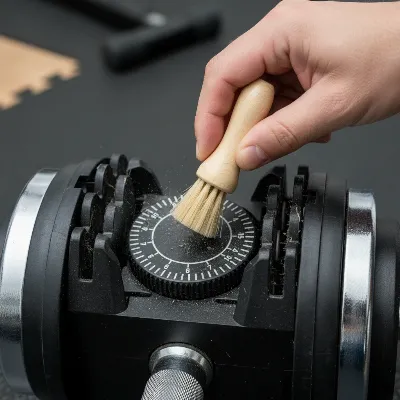 Close-up of a hand using a small brush to clean debris from an adjustable dumbbell's weight plate slots and dial mechanism.
Conclusion
A stuck dial on your adjustable dumbbell set is a common but usually solvable problem. By systematically checking for misalignment, clearing out debris, and ensuring proper resetting, you can often get your equipment back in working order in no time. Consistent preventive maintenance, including regular cleaning and careful handling, is your best defense against future issues, ensuring your dumbbells remain reliable for every lift. Don’t let a minor snag derail your fitness goals – take action and keep those gains coming. What’s your go-to maintenance routine for your adjustable dumbbells?
Frequently Asked Questions
Why won’t my adjustable dumbbell dial turn even after cleaning?
If your dial remains stuck after thorough cleaning, it’s likely an issue with internal component misalignment or damage, not just surface debris. Re-check that all weight plates are perfectly aligned and seated. You may also need to try resetting the handle by removing it from the base and pressing any internal release buttons before rotating the dial to the lowest setting and reassembling carefully.
Can I use WD-40 or similar lubricants on my adjustable dumbbells?
It’s generally recommended to use lubricants specifically designed for gym equipment or silicone-based sprays. While WD-40 can help loosen stuck parts, it can also attract dust and dirt over time, potentially leading to more frequent jamming. Always use lubricants sparingly and wipe off any excess.
What should I do if a weight plate is stuck to the handle?
If a weight plate remains stuck to the handle after you’ve removed it from the base, it indicates the internal locking mechanism for that plate hasn’t fully disengaged. Try pressing the reset button (if available) while gently rotating the dial to its lowest setting. You may need to gently wiggle the stuck plate to help it release.
How often should I perform maintenance on my adjustable dumbbells?
A quick wipe-down after every use is ideal. A more thorough cleaning, inspecting for debris and checking alignment, should be done monthly, or more frequently if you use them heavily or notice any stiffness in the dial. Regular maintenance prevents small issues from becoming significant problems.
Frequently Asked Questions
Why won't my adjustable dumbbell dial turn even after cleaning?
If your dial remains stuck after thorough cleaning, it's likely an issue with internal component misalignment or damage, not just surface debris. Re-check that all weight plates are perfectly aligned and seated. You may also need to try resetting the handle by removing it from the base and pressing any internal release buttons before rotating the dial to the lowest setting and reassembling carefully.
Can I use WD-40 or similar lubricants on my adjustable dumbbells?
It's generally recommended to use lubricants specifically designed for gym equipment or silicone-based sprays. While WD-40 can help loosen stuck parts, it can also attract dust and dirt over time, potentially leading to more frequent jamming. Always use lubricants sparingly and wipe off any excess.
What should I do if a weight plate is stuck to the handle?
If a weight plate remains stuck to the handle after you've removed it from the base, it indicates the internal locking mechanism for that plate hasn't fully disengaged. Try pressing the reset button (if available) while gently rotating the dial to its lowest setting. You may need to gently wiggle the stuck plate to help it release.
How often should I perform maintenance on my adjustable dumbbells?
A quick wipe-down after every use is ideal. A more thorough cleaning, inspecting for debris and checking alignment, should be done monthly, or more frequently if you use them heavily or notice any stiffness in the dial. Regular maintenance prevents small issues from becoming significant problems.
What are the main causes of a stuck adjustable dumbbell dial?
The main causes of a stuck adjustable dumbbell dial include misalignment of weight plates or the handle, accumulation of debris like dust and sweat within the mechanism, and internal component problems such as bent locking pins or worn-out parts. Regular inspection can help identify these issues early.
How to Fix a Stuck Dial on Adjustable Dumbbells
Follow these steps to diagnose and fix a stuck adjustment dial on your adjustable dumbbells, restoring their functionality.
Prioritize safety by working close to the ground. Stabilize the dumbbell base, then firmly pull the handle directly upwards to separate it from the base and any attached weights. A quick, sharp pull may be necessary if it's heavily stuck.
Once the handle is free, locate the reset button or mechanism, often found on the underside or side of the handle (e.g., on Bowflex SelectTech). Press and hold this button while slowly rotating the dial on both ends to its lowest weight setting (e.g., 5 lbs or 10 lbs) to release any remaining weight plates.
With the handle separated, thoroughly inspect and clean the dumbbell base, weight plates, and the handle's internal mechanism. Use a soft-bristle brush, dry cloth, or compressed air to remove dust, dirt, and debris from slots and selector tabs. Ensure selector tabs on plates face outwards.
Carefully return each weight plate to its corresponding slot in the storage base, ensuring they are all facing the same direction and sit snugly. If the dial still feels stiff, apply a small amount of gym-specific or silicone-based lubricant sparingly to moving parts, wiping away any excess.
Ensure both dials on the handle are set to the lowest weight, then carefully place the handle back into the storage base until it clicks securely. Slowly rotate the dials to various weight settings to confirm smooth operation without resistance. Lift the dumbbell to verify selected weights are securely locked.
Equipment that holds up past 60 sessions
Practical specs, not advice. Unsubscribe anytime.

This was a lifesaver! My dial was completely stuck, and I was so frustrated thinking I’d have to buy new ones. Following the steps to clear out accumulated dust and sweat made all the difference. It’s amazing how much gunk can get in there over time. Now my dumbbells are working like new, and I didn’t have to spend a dime on repairs.
Seriously, thank you for this! My adjustable dumbbells have been collecting dust because of a stuck dial, and I was about to give up on them. The detailed explanation of how to troubleshoot and what to look for, like internal component problems, gave me the confidence to tackle it. Now I can get back to my home workouts without any issues.
I’ve had my adjustable dumbbells for about a year now, and the dial just started getting sticky. The tip about checking for misaligned weight plates was spot on! I didn’t even realize one was slightly off. After reseating it, the dial is much smoother. Still not perfect, but a huge improvement and I can actually adjust them again without a struggle.
I tried all the suggestions for my stuck dial, especially the part about resetting the internal mechanism. It helped a little, but it’s still pretty stiff. I think my issue might be more internal than just debris or misalignment. It’s usable now, but I have to really force it sometimes. Good tips overall though.