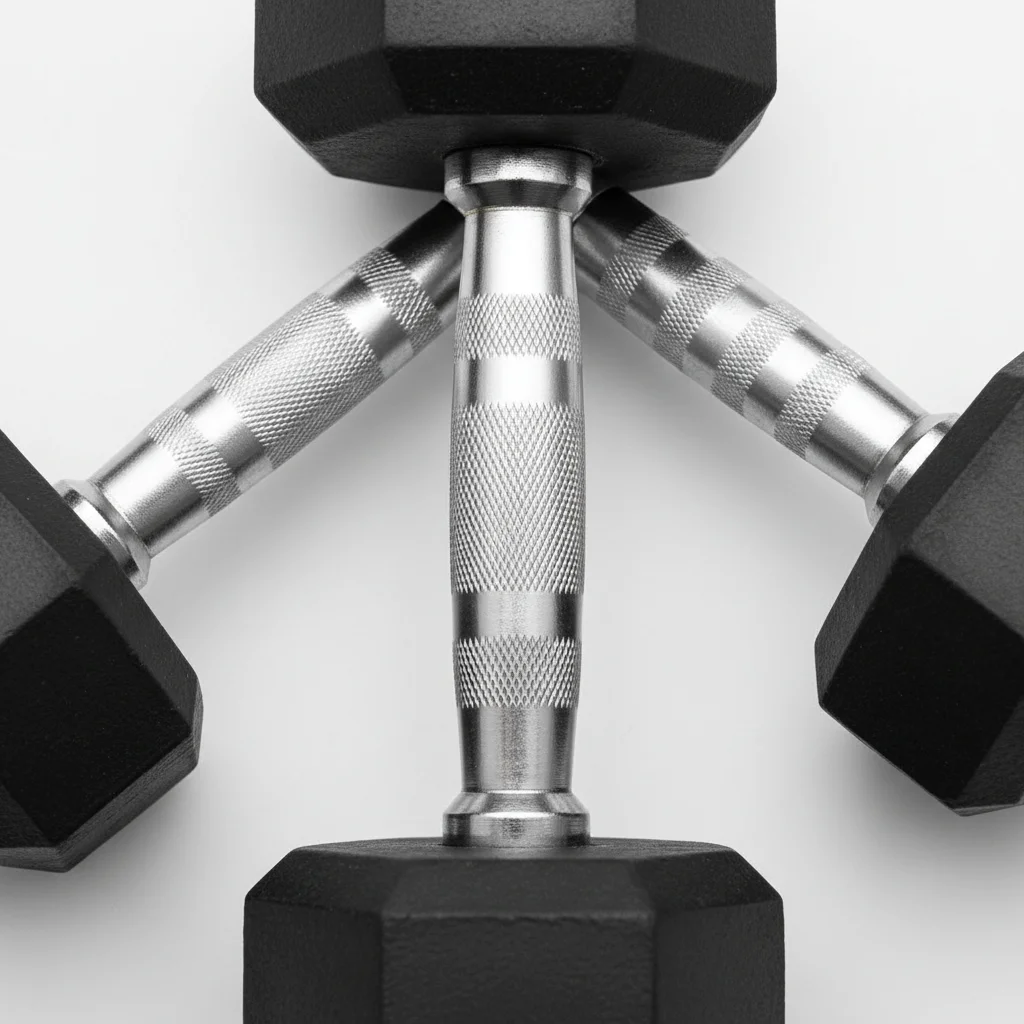
Dumbbell set knurling refers to the etched pattern on the handle that enhances grip and prevents slippage during workouts. The best knurling pattern for optimal grip is typically a medium-depth, diamond-shaped pattern, as it provides a secure hold without being overly aggressive or causing discomfort. This specific pattern balances friction and comfort, crucial for maintaining control during heavy lifts and high-repetition exercises.
The purpose of knurling is to increase the coefficient of friction between the lifter’s hand and the dumbbell handle. Without it, sweat and natural oils would make the handle slick, leading to dangerous slips and compromised form. Different knurling patterns offer varying degrees of grip, from very fine and shallow to deep and aggressive. The ideal choice often depends on individual preference, the type of lifting, and the weight being handled.
Understanding Different Knurling Patterns
Knurling patterns are not all created equal. The most common type is the diamond knurl, characterized by intersecting diagonal lines that form small diamond shapes. This pattern can vary in depth and sharpness. A medium diamond knurl is widely regarded as a versatile option, offering good grip for most users. Finer knurling, often found on lighter dumbbells or those designed for high-rep work, provides a less abrasive feel but might offer less security for maximal lifts. Coarser, more aggressive knurling, sometimes called ‘mountain’ or ‘volcano’ knurling, is typically reserved for powerlifting barbells or very heavy dumbbells where maximum grip is paramount, even at the cost of some hand comfort.
Beyond the diamond pattern, some manufacturers experiment with straight-line knurling or even hybrid designs. However, the diamond pattern remains the industry standard due to its effectiveness in creating multi-directional friction. The consistency and depth of the knurl across the handle are also critical; uneven knurling can lead to hot spots or areas of reduced grip.
Factors Influencing Knurling Effectiveness
Several factors contribute to how effective a dumbbell’s knurling feels. The material of the dumbbell handle plays a significant role; chrome-plated steel, for instance, can sometimes feel slicker than bare steel, even with identical knurling, due to the plating’s surface properties. Hand size and skin type also influence perception; someone with naturally drier hands might find a finer knurl sufficient, while someone prone to sweaty palms might prefer a deeper, more aggressive pattern. Furthermore, the use of chalk can significantly enhance the grip on any knurling pattern, making even a moderate knurl feel much more secure.
The type of exercise also dictates the required grip. For exercises like bicep curls or lateral raises, a less aggressive knurl might be perfectly adequate. However, for heavy rows, deadlifts, or overhead presses, a more pronounced knurl is often preferred to prevent the dumbbell from slipping mid-set. Consider the overall weight capacity and intended use of your dumbbell set when evaluating knurling.
Maintaining Your Dumbbell Knurling
|
Our Picks for the Best Dumbbell Set in 2026
As an Amazon Associate I earn from qualifying purchases.
|
||
| Num | Product | Action |
|---|---|---|
| 1 | Adjustable dumbbell set,20/35/45/55/70/90lbs Free Weights set with upgraded nut, 5 in 1 Weight Set Used as Kettlebells, Barbell, Push up Stand, Fitness Exercise for Home Gym Suitable Men/Women |

|
| 2 | Adjustable Dumbbells Set of 2,Free Weights Dumbbells Set,Adjustable Dumbbell Set,52.5 lbs pair 105 lbs,15 in 1,for Men/Women Gym Equipment for Home Strength Training Equipment |
|
| 3 | Adjustable Dumbbell Set, 20/33/45/70/90lbs Free Weight Set with Connector, 4 in1 Dumbbells Set Used as Barbell, Kettlebells, Push up Stand, Weight Set for Home Gym Suitable Men/Women |
|
| 4 | PowerBlock Elite EXP Adjustable Dumbbells, Sold in Pairs, Stage 1, 5-50 lb. Dumbbells, Durable Steel Build, Innovative Workout Equipment, All-in-One Dumbbells, Expandable with Expansion Kits |
|
| 5 | CAP Barbell 150 LB Coated Hex Dumbbell Weight Set with Vertical Rack | Multiple Options |
|
| 6 | Amazon Basics Neoprene Dumbbell Hand Weights for Exercise and Muscle Toning |
|
| 7 | Amazon Basics Neoprene Dumbbell Hand Weights for Exercise and Muscle Toning |
|
| 8 | Fitvids Set of 6 Neoprene Dumbbell Hand Weights, Set with Rack: 2/3/5 Pairs |
|
| 9 | Adjustable Dumbbells, 20/30/45/70/90lbs Free Weight Set with Connector,5 in1 Dumbbells Set Used as Barbell,Kettlebells,Push up Stand,Fitness Exercises for Home Gym Suitable Men/Women |
|
| 10 | Amazon Basics Neoprene Dumbbell Hand Weights for Exercise and Muscle Toning |
|
Proper maintenance is essential to ensure your dumbbell knurling remains effective over time. Over time, sweat, skin cells, and chalk residue can accumulate in the knurling grooves, reducing their sharpness and grip. Regularly cleaning your dumbbell handles with a stiff brush (like a nylon or brass brush) and a mild cleaning solution can help remove this buildup. For stubborn grime, a wire brush can be used carefully, but avoid excessive force that could damage the knurling itself or the handle’s finish.
- Use a nylon brush for routine cleaning to remove chalk and light debris.
- For deeper cleaning, a brass brush can dislodge more stubborn grime without damaging steel.
- Avoid harsh chemicals that could corrode the handle or strip its finish.
- Ensure handles are thoroughly dried after cleaning to prevent rust, especially on bare steel.
- Store dumbbells in a dry environment to minimize moisture exposure.
Regular inspection for any signs of wear or damage to the knurling is also advisable. While knurling is designed to be durable, extreme impact or improper storage can sometimes flatten or chip the pattern, compromising its effectiveness.
Choosing the Right Knurling for Your Needs
When selecting a dumbbell set, consider your personal preferences and training goals. If you prioritize comfort for high-volume training or have sensitive hands, a finer or medium-depth knurling might be ideal. For those who lift heavy and prioritize maximum grip security, a more aggressive, deeper diamond knurl will be more suitable. Many manufacturers provide detailed descriptions or even close-up images of their knurling, which can be helpful in making an informed decision. If possible, try out different dumbbells in person to get a feel for various knurling patterns before committing to a purchase.
Ultimately, the ‘best’ knurling is subjective and depends on the individual lifter. However, a well-executed medium diamond knurl offers a robust balance of grip and comfort for the majority of home and commercial gym users. It provides enough friction to prevent slippage during challenging lifts while minimizing the risk of excessive hand fatigue or calluses.
Equipment that holds up past 60 sessions
Practical specs, not advice. Unsubscribe anytime.
