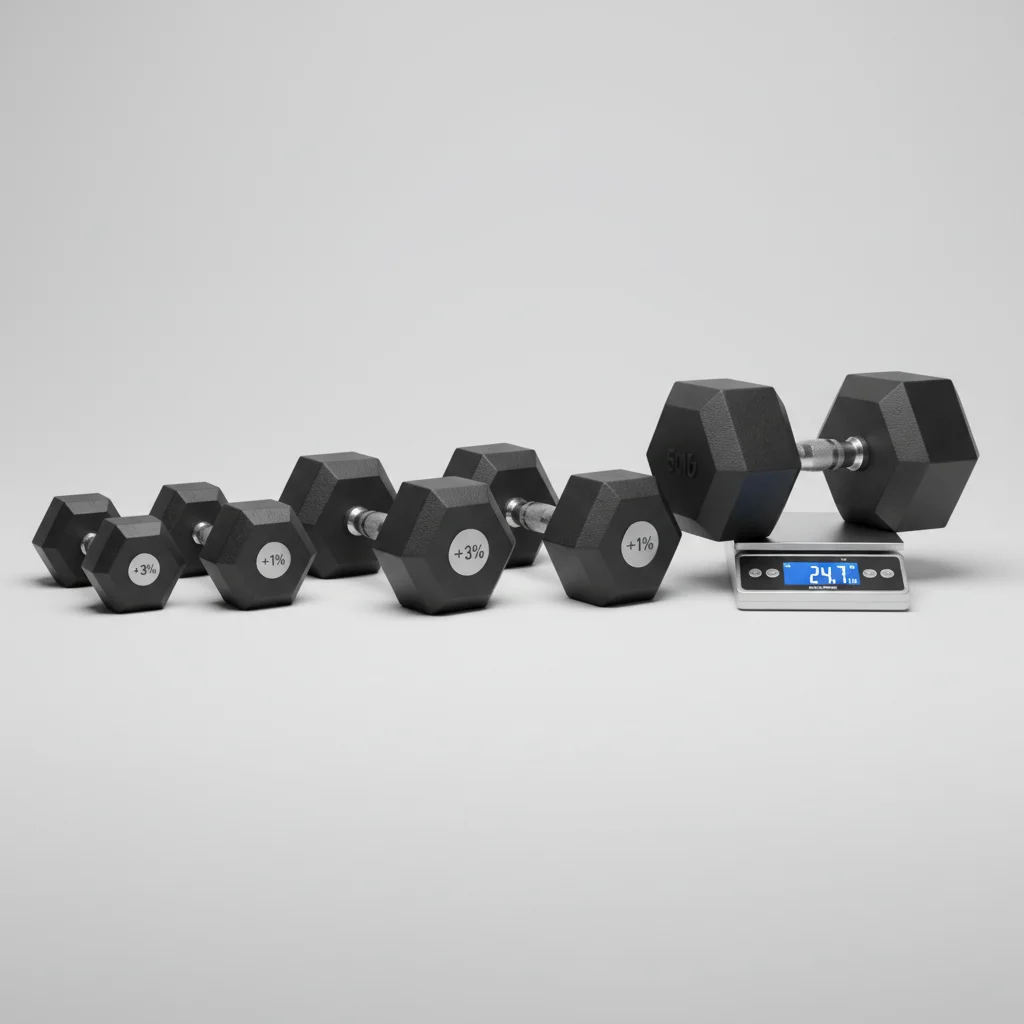
When investing in a dumbbell set, understanding weight tolerances is crucial for effective and balanced strength training. Generally, a weight tolerance of +/- 3% is considered acceptable for most home and commercial gym dumbbells. This means a 20-pound dumbbell could realistically weigh anywhere between 19.4 and 20.6 pounds. While seemingly small, significant discrepancies can impact muscle development and exercise safety over time.
Why Weight Tolerance Matters for Your Workouts
Accurate weight is fundamental to progressive overload and symmetrical muscle development. If one dumbbell in a pair is consistently heavier than the other, it can lead to muscular imbalances, increasing the risk of injury and hindering your progress. For example, if you’re performing bicep curls with a 20-pound dumbbell that’s actually 21 pounds and another that’s 19 pounds, your body will compensate, potentially overworking one side.
Furthermore, precise weight tolerance is especially important for advanced lifters and those tracking their progress meticulously. Small variations can make a difference when attempting personal bests or following highly structured training programs.
Common Weight Tolerance Standards in the Industry
Different manufacturers adhere to varying standards for weight tolerance. High-quality competition-grade dumbbells often boast tighter tolerances, sometimes as low as +/- 1% or even 0.5%. For general fitness and home gym use, a +/- 3% tolerance is widely accepted. Budget-friendly options might have wider tolerances, which is something to consider if precision is a high priority for your training.
It’s always advisable to check the manufacturer’s specifications before purchasing. Reputable brands will typically disclose their weight tolerance standards, giving you peace of mind about the accuracy of your equipment.
How to Check Your Dumbbell Set’s Weight Accuracy
|
Our Picks for the Best Dumbbell Set in 2026
As an Amazon Associate I earn from qualifying purchases.
|
||
| Num | Product | Action |
|---|---|---|
| 1 | CAP Barbell 150 LB Coated Hex Dumbbell Weight Set with Vertical Rack | Multiple Options |

|
| 2 | Fitvids Set of 6 Neoprene Dumbbell Hand Weights, Set with Rack: 2/3/5 Pairs |
|
| 3 | Adjustable dumbbell set,20/35/45/55/70/90lbs Free Weights set with upgraded nut, 5 in 1 Weight Set Used as Kettlebells, Barbell, Push up Stand, Fitness Exercise for Home Gym Suitable Men/Women |
|
| 4 | Adjustable Dumbbells, 20/30/45/70/90lbs Free Weight Set with Connector,5 in1 Dumbbells Set Used as Barbell,Kettlebells,Push up Stand,Fitness Exercises for Home Gym Suitable Men/Women |
|
| 5 | Adjustable Dumbbell Set, 20/33/45/70/90lbs Free Weight Set with Connector, 4 in1 Dumbbells Set Used as Barbell, Kettlebells, Push up Stand, Weight Set for Home Gym Suitable Men/Women |
|
| 6 | PowerBlock Elite EXP Adjustable Dumbbells, Sold in Pairs, Stage 1, 5-50 lb. Dumbbells, Durable Steel Build, Innovative Workout Equipment, All-in-One Dumbbells, Expandable with Expansion Kits |
|
| 7 | Amazon Basics Neoprene Dumbbell Hand Weights for Exercise and Muscle Toning |
|
| 8 | Adjustable Dumbbells Set of 2,Free Weights Dumbbells Set,Adjustable Dumbbell Set,52.5 lbs pair 105 lbs,15 in 1,for Men/Women Gym Equipment for Home Strength Training Equipment |
|
| 9 | Amazon Basics Neoprene Dumbbell Hand Weights for Exercise and Muscle Toning |
|
| 10 | Amazon Basics Neoprene Dumbbell Hand Weights for Exercise and Muscle Toning |
|
You can perform a simple check at home to gauge the accuracy of your dumbbells. A reliable digital luggage scale or kitchen scale can be used for smaller weights. For heavier dumbbells, a bathroom scale can provide a general idea, though its accuracy for precise measurements might be limited. Weigh each dumbbell individually and compare the actual weight to the stated weight. Note any significant deviations, especially between dumbbells intended to be a pair.
If you find a dumbbell is consistently outside the acceptable +/- 3% range, especially if it’s a new purchase, it might be worth contacting the retailer or manufacturer. Many will offer replacements or refunds for equipment that doesn’t meet their advertised specifications.
Factors Influencing Dumbbell Weight Consistency
Several factors contribute to the weight consistency of dumbbells. The manufacturing process plays a significant role; precision casting and machining lead to more accurate weights. The material used also matters; cast iron, rubber, and urethane all have different densities and manufacturing challenges. Quality control during production is paramount in ensuring that dumbbells meet their stated weight.
Even the type of dumbbell can influence tolerance. Fixed-weight dumbbells generally have more consistent weights than adjustable dumbbells, where the plates and locking mechanisms can introduce slight variations. However, modern adjustable dumbbells from reputable brands are designed to minimize these discrepancies.
Tips for Choosing a Dumbbell Set with Good Weight Tolerance
- Read Product Reviews: Look for feedback from other buyers regarding weight accuracy.
- Check Manufacturer Specifications: Reputable brands often state their tolerance levels.
- Consider the Price Point: Higher-priced, premium dumbbells often have better quality control and tighter tolerances.
- Inspect Upon Arrival: Weigh your dumbbells as soon as you receive them to ensure they meet expectations.
- Prioritize Reputable Brands: Established brands typically have better quality control processes.
Understanding and considering dumbbell set weight tolerances will help you make an informed purchase, ensuring your workouts are effective, balanced, and safe. Don’t underestimate the impact of even small weight discrepancies on your long-term fitness goals.
Equipment that holds up past 60 sessions
Practical specs, not advice. Unsubscribe anytime.

Excellent breakdown! I’ve been lifting for years and always just assumed dumbbells were exactly the weight they claimed. The example of a 20-pound dumbbell actually being 19.4 to 20.6 pounds really put it into perspective. It’s definitely something I’ll be considering for exercise safety, especially with heavier lifts.
This was super helpful. I’m upgrading my home gym and was looking at some heavier fixed dumbbells. I never really thought about how much a few pounds here or there could affect my progressive overload. Knowing that significant discrepancies can impact muscle development makes me want to be more careful when choosing a brand.
I always wondered about this! I bought a set of adjustable dumbbells a while back and one always felt a little off. After reading about the +/- 3% tolerance, I actually weighed them and sure enough, one was just outside that range. It’s good to know what to look for now, especially since I’m trying to avoid muscular imbalances.
I appreciate the info on weight tolerance, but I wish there were more specific brand recommendations that consistently meet the +/- 3% standard. It’s hard to know which brands to trust just from this. My current set of 20-pound dumbbells feels pretty balanced, but I’m still a bit nervous about future purchases.