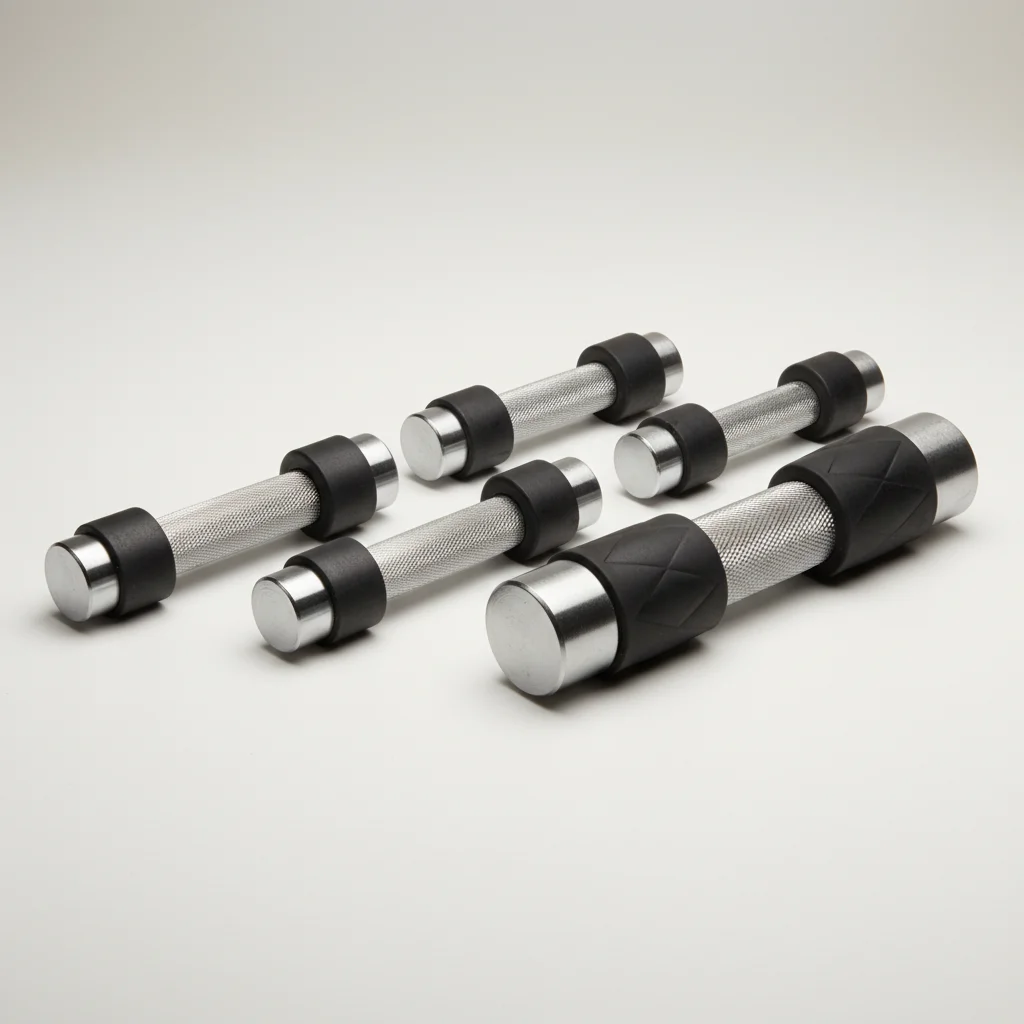
Choosing the right grip diameter for your dumbbell set handles is crucial for both comfort and performance. Generally, grip diameters range from 25mm to 35mm, with 28mm to 30mm being the most common and often ideal for a wide range of lifters. The optimal diameter depends on several factors, including hand size, lifting goals, and the specific exercises you perform. A grip that is too thin can lead to excessive hand fatigue and a feeling of instability, while a grip that is too thick can make it difficult to maintain a secure hold, especially during heavier lifts.
For most individuals, a 28mm to 30mm diameter provides a balanced blend of comfort and control. This range allows for a strong, secure grip without over-engaging the forearms prematurely. Lifters with smaller hands might find a 25mm or 28mm grip more comfortable, enabling them to wrap their fingers more effectively around the handle. Conversely, those with larger hands or lifters specifically training grip strength might prefer a thicker handle, such as 32mm or 35mm, to challenge their forearms more intensely. It’s important to consider how the grip feels during various movements, from presses to rows, to ensure it supports proper form and minimizes the risk of injury. For expert home reviews on this site.
Understanding Standard vs. Thick Grips
Standard dumbbell handles typically fall within the 25mm to 30mm range. These are widely available and suitable for general strength training. They allow for a full range of motion and are comfortable for most users. Thick grips, often 32mm or more, are specifically designed to enhance grip strength. By increasing the diameter, the hand has to work harder to maintain a secure hold, which translates to stronger forearms and improved overall lifting capacity. While beneficial for grip development, thick grips can be challenging for beginners or those with smaller hands, potentially limiting the weight they can lift for other muscle groups.
When selecting a dumbbell set, consider your primary training objectives. If your goal is general fitness and muscle building, a standard grip will likely suffice. If you’re looking to specifically target and improve your grip strength, incorporating a set with thicker handles or using grip attachments on existing dumbbells can be highly effective. Remember that consistency with any grip size will lead to adaptations over time, but starting with a comfortable and appropriate diameter is key to long-term progress.
Impact on Lifting Performance and Injury Prevention
|
Our Picks for the Best Dumbbell Set in 2026
As an Amazon Associate I earn from qualifying purchases.
|
||
| Num | Product | Action |
|---|---|---|
| 1 | Adjustable dumbbell set,20/35/45/55/70/90lbs Free Weights set with upgraded nut, 5 in 1 Weight Set Used as Kettlebells, Barbell, Push up Stand, Fitness Exercise for Home Gym Suitable Men/Women |

|
| 2 | Amazon Basics Neoprene Dumbbell Hand Weights for Exercise and Muscle Toning |
|
| 3 | CAP Barbell 150 LB Coated Hex Dumbbell Weight Set with Vertical Rack | Multiple Options |
|
| 4 | Fitvids Set of 6 Neoprene Dumbbell Hand Weights, Set with Rack: 2/3/5 Pairs |
|
| 5 | Adjustable Dumbbells, 20/30/45/70/90lbs Free Weight Set with Connector,5 in1 Dumbbells Set Used as Barbell,Kettlebells,Push up Stand,Fitness Exercises for Home Gym Suitable Men/Women |
|
| 6 | Adjustable Dumbbell Set, 20/33/45/70/90lbs Free Weight Set with Connector, 4 in1 Dumbbells Set Used as Barbell, Kettlebells, Push up Stand, Weight Set for Home Gym Suitable Men/Women |
|
| 7 | PowerBlock Elite EXP Adjustable Dumbbells, Sold in Pairs, Stage 1, 5-50 lb. Dumbbells, Durable Steel Build, Innovative Workout Equipment, All-in-One Dumbbells, Expandable with Expansion Kits |
|
| 8 | Amazon Basics Neoprene Dumbbell Hand Weights for Exercise and Muscle Toning |
|
| 9 | Amazon Basics Neoprene Dumbbell Hand Weights for Exercise and Muscle Toning |
|
| 10 | Adjustable Dumbbells Set of 2,Free Weights Dumbbells Set,Adjustable Dumbbell Set,52.5 lbs pair 105 lbs,15 in 1,for Men/Women Gym Equipment for Home Strength Training Equipment |
|
The right grip diameter directly impacts your lifting performance. A comfortable and secure grip allows you to focus on the target muscles rather than struggling to hold onto the weight. This can lead to better muscle activation and more effective workouts. Conversely, an ill-fitting grip can cause discomfort, reduce your ability to lift heavier weights, and even contribute to injuries like wrist strain or tendonitis. For example, a grip that is too small might encourage excessive wrist flexion, while one that is too large could lead to an insecure hold and potential drops.
Proper grip mechanics are also vital for injury prevention. A neutral wrist position is generally recommended during most dumbbell exercises, and the correct grip diameter facilitates this. When your grip is compromised, you might compensate with other parts of your body, leading to imbalances and increased risk of injury. Investing in a dumbbell set with handles that fit your hands well is a proactive step towards safer and more effective training.
Grip Materials and Textures
Beyond diameter, the material and texture of dumbbell handles also play a significant role in grip comfort and security. Common materials include chrome, knurled steel, and rubberized coatings. Knurled steel handles, characterized by their cross-hatched pattern, offer excellent grip, especially when hands are sweaty. The depth and sharpness of the knurling vary, with some being more aggressive than others. Chrome handles often have a smoother finish but can still provide a decent grip, though they might become slippery with sweat.
Rubberized or urethane-coated handles offer a softer, more tactile feel and can be less abrasive on the hands. These are often found on lighter dumbbell sets or those designed for group fitness classes. While they provide good friction, they may not offer the same level of secure grip as aggressive knurling for very heavy lifts. Consider your personal preference and how much grip assistance you typically need. Some lifters prefer to use chalk with knurled handles for maximum security, while others find rubberized grips sufficient.
Choosing the Right Grip for Specific Exercises
The ideal grip diameter can also vary depending on the exercise. For exercises requiring a strong, stable hold, such as dumbbell rows or deadlifts, a slightly thicker or well-knurled grip might be preferred to maximize pulling power. For exercises like bicep curls or tricep extensions, where the focus is more on isolation and less on maximal grip strength, a standard diameter might be more comfortable and allow for better muscle contraction. Here are some considerations:
- Pressing Movements (Bench Press, Overhead Press): A 28mm-30mm diameter often provides a secure yet comfortable grip, allowing focus on chest and shoulder activation.
- Pulling Movements (Rows, Deadlifts): A slightly thicker grip (30mm-32mm) or aggressive knurling can enhance grip strength and stability for heavier lifts.
- Isolation Exercises (Curls, Extensions): Standard grips (25mm-28mm) are typically sufficient, prioritizing muscle isolation over maximal grip challenge.
- High-Rep Workouts: Smoother knurling or rubberized grips might be more comfortable to prevent hand tearing over many repetitions.
- Grip-Specific Training: Thicker handles (32mm+) are excellent for directly targeting forearm and grip strength.
Ultimately, the best way to determine the optimal grip diameter for your dumbbell set handles is through personal experimentation. If possible, try out different diameters at a gym or fitness store before making a purchase. Pay attention to how your hands feel, how securely you can hold the weight, and whether you can maintain proper form throughout your exercises. A well-chosen grip will significantly enhance your training experience and contribute to your long-term success in the gym.
Equipment that holds up past 60 sessions
Practical specs, not advice. Unsubscribe anytime.
