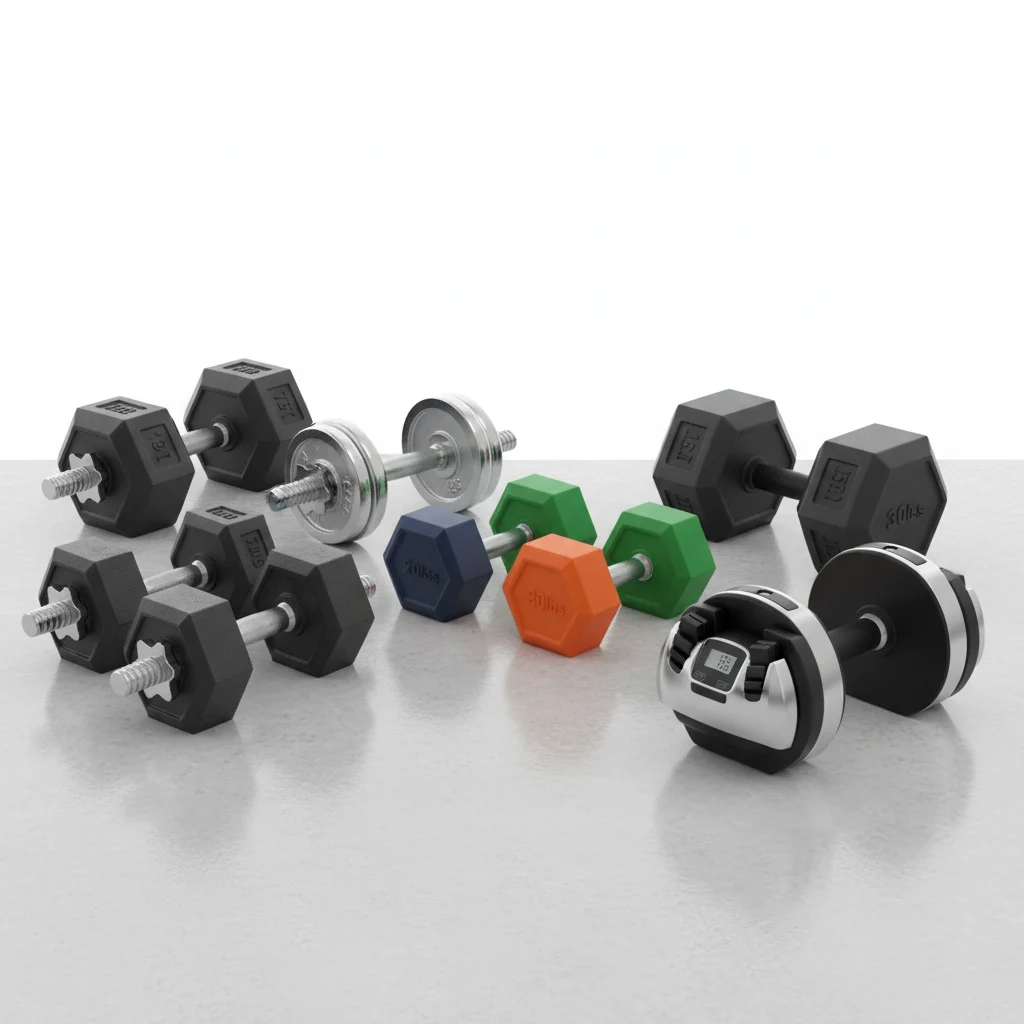
Choosing the right dumbbell set material is crucial for durability, feel, and overall workout experience. There are five primary types of materials used for dumbbells: cast iron, rubber, urethane, neoprene, and chrome. Each material offers distinct advantages and disadvantages, impacting everything from grip and noise to longevity and price point. Understanding these differences will help you select the best set for your home gym or commercial facility, ensuring your investment aligns with your fitness goals and budget.
Cast Iron Dumbbells: The Classic Choice
Cast iron dumbbells are the traditional and often most affordable option. Known for their rugged durability, these dumbbells are typically solid pieces of iron, sometimes with a protective coating. They offer a firm, unyielding grip, which some lifters prefer for a raw, tactile feel. However, cast iron can be prone to rust if not properly maintained, and they can be noisy if dropped, potentially damaging floors without adequate protection. They are a staple in many powerlifting and strength training environments due to their robustness. For expert home reviews on this site.
Rubber Dumbbells: Protection and Performance
Rubber-coated dumbbells are a popular choice for home and commercial gyms alike. The rubber coating provides several benefits, including floor protection, reduced noise during workouts, and enhanced grip. This material also helps prevent rust on the underlying iron core. While generally more expensive than bare cast iron, the added protection and reduced maintenance often justify the cost. They are available in various shapes, most commonly hex, which prevents rolling.
Urethane Dumbbells: Premium Durability and Aesthetics
Urethane dumbbells represent the premium end of the spectrum. Urethane is a highly durable, non-marking, and odor-free material that is superior to rubber in terms of longevity and resistance to wear and tear. These dumbbells maintain their appearance over time, resisting scuffs, chips, and fading. While they come with a higher price tag, their exceptional durability makes them a long-term investment for serious lifters and high-traffic gyms. Urethane also offers excellent shock absorption and a comfortable grip.
Neoprene Dumbbells: Comfort and Color
Neoprene-coated dumbbells are often found in lighter weight ranges and are popular for aerobics, cardio, and rehabilitation exercises. The neoprene coating provides a soft, comfortable, and non-slip grip, even when hands are sweaty. They are typically color-coded by weight, making it easy to identify the desired resistance. While not designed for heavy lifting or dropping, their gentle nature makes them ideal for beginners or those focusing on higher repetitions and lighter loads. They are also less likely to damage floors than bare metal.
Chrome Dumbbells: Sleek and Stylish
Chrome dumbbells offer a sleek, polished aesthetic that can elevate the look of any home gym. Made from steel with a chrome plating, they are durable and resistant to rust, though the plating can chip or scratch over time with heavy use. They provide a smooth, firm grip and are often chosen for their visual appeal. While not as impact-resistant as rubber or urethane, chrome dumbbells are a good option for those who prioritize appearance and moderate lifting.
Choosing Your Ideal Dumbbell Material
|
Our Picks for the Best Dumbbell Set in 2026
As an Amazon Associate I earn from qualifying purchases.
|
||
| Num | Product | Action |
|---|---|---|
| 1 | Adjustable dumbbell set,20/35/45/55/70/90lbs Free Weights set with upgraded nut, 5 in 1 Weight Set Used as Kettlebells, Barbell, Push up Stand, Fitness Exercise for Home Gym Suitable Men/Women |

|
| 2 | Fitvids Set of 6 Neoprene Dumbbell Hand Weights, Set with Rack: 2/3/5 Pairs |
|
| 3 | Amazon Basics Neoprene Dumbbell Hand Weights for Exercise and Muscle Toning |
|
| 4 | Adjustable Dumbbells, 20/30/45/70/90lbs Free Weight Set with Connector,5 in1 Dumbbells Set Used as Barbell,Kettlebells,Push up Stand,Fitness Exercises for Home Gym Suitable Men/Women |
|
| 5 | Adjustable Dumbbell Set, 20/33/45/70/90lbs Free Weight Set with Connector, 4 in1 Dumbbells Set Used as Barbell, Kettlebells, Push up Stand, Weight Set for Home Gym Suitable Men/Women |
|
| 6 | PowerBlock Elite EXP Adjustable Dumbbells, Sold in Pairs, Stage 1, 5-50 lb. Dumbbells, Durable Steel Build, Innovative Workout Equipment, All-in-One Dumbbells, Expandable with Expansion Kits |
|
| 7 | Adjustable Dumbbells Set of 2,Free Weights Dumbbells Set,Adjustable Dumbbell Set,52.5 lbs pair 105 lbs,15 in 1,for Men/Women Gym Equipment for Home Strength Training Equipment |
|
| 8 | Amazon Basics Neoprene Dumbbell Hand Weights for Exercise and Muscle Toning |
|
| 9 | CAP Barbell 150 LB Coated Hex Dumbbell Weight Set with Vertical Rack | Multiple Options |
|
| 10 | Amazon Basics Neoprene Dumbbell Hand Weights for Exercise and Muscle Toning |
|
When deciding on the best dumbbell material, consider the following factors:
- Budget: Cast iron is generally the most affordable, while urethane is the most expensive.
- Durability: Urethane and rubber offer superior longevity and impact resistance.
- Noise Level: Rubber and neoprene significantly reduce noise compared to cast iron or chrome.
- Floor Protection: Rubber and urethane are best for protecting floors from damage.
- Grip Preference: Some prefer the raw feel of cast iron, while others prefer the comfort of neoprene or the tackiness of rubber.
Ultimately, the best material for your dumbbell set depends on your specific needs, workout style, and environment. Evaluate these aspects carefully to make an informed decision that supports your fitness journey for years to come.
Equipment that holds up past 60 sessions
Practical specs, not advice. Unsubscribe anytime.
