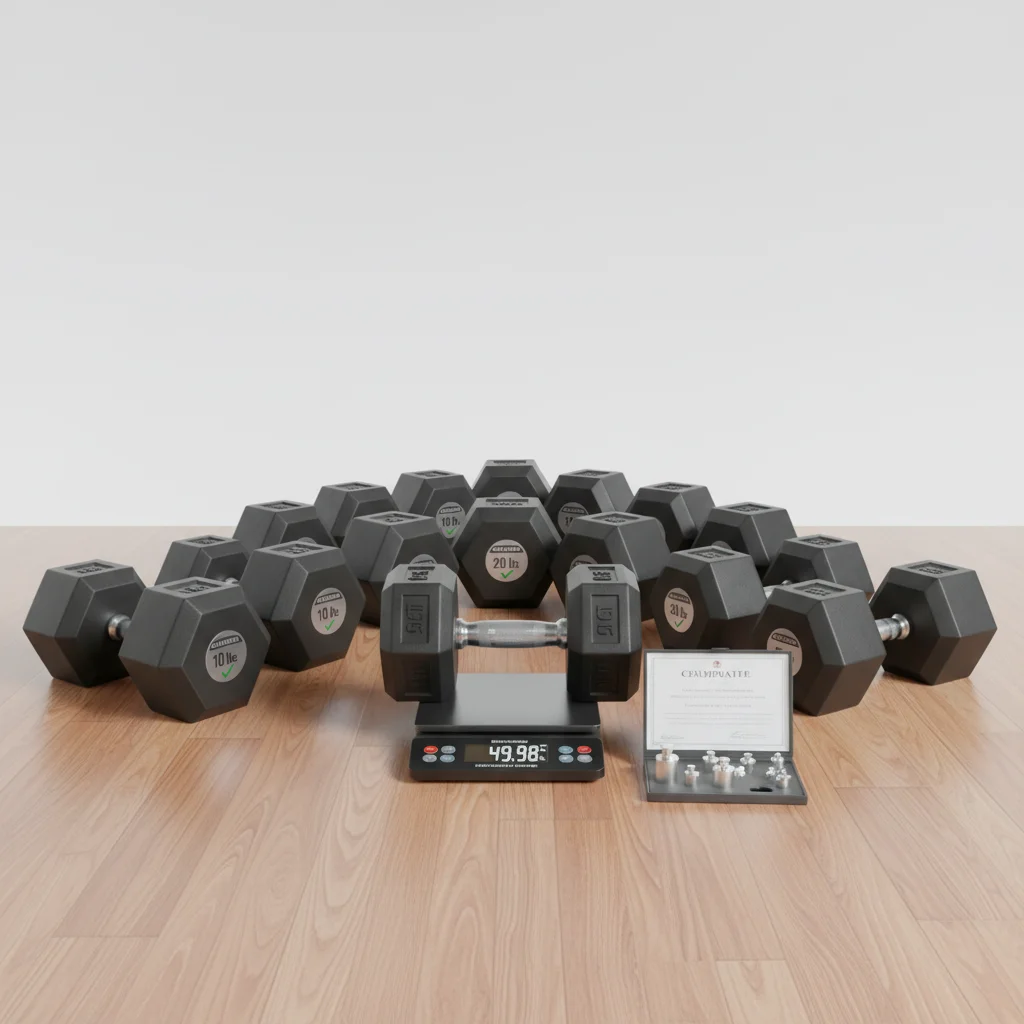
Dumbbell set calibrations are crucial for accurate strength training, ensuring that the weight you lift precisely matches the stated value. Inaccurate dumbbells can lead to imbalanced muscle development, hinder progress tracking, and even increase the risk of injury. Understanding the importance of calibration helps lifters make informed decisions about their equipment and optimize their workout routines.
The Science Behind Weight Accuracy
Weight accuracy in dumbbells isn’t just about a number; it’s about physics and physiology. When a dumbbell is labeled as 20 pounds, it should weigh exactly that, or within a very tight tolerance. Manufacturers use precise molds and materials, often cast iron or steel, and then machine them to meet specific weight requirements. Any deviation, even a small one, can impact the load on your muscles and joints. For instance, a 5% discrepancy on a 50-pound dumbbell means you’re lifting 2.5 pounds more or less than intended, which can significantly affect progressive overload principles.
Factors like material density, casting imperfections, and even the type of coating can influence the final weight. High-quality dumbbells undergo rigorous testing to ensure they meet industry standards for accuracy. This attention to detail is particularly important for competitive powerlifters and bodybuilders, where every pound, or even ounce, can make a difference in performance and competition results.
Impact on Muscle Symmetry and Development
Lifting dumbbells with inconsistent weights can lead to muscular imbalances. If one dumbbell in a pair is heavier than the other, even slightly, your body will naturally compensate, causing one side to work harder. Over time, this can result in noticeable differences in muscle size and strength between your left and right sides. Such imbalances not only look uneven but can also predispose you to injuries, as the stronger side may overcompensate, putting undue stress on joints and ligaments.
Proper calibration ensures that both sides of your body receive an equal stimulus during bilateral exercises, promoting balanced strength and hypertrophy. This is vital for overall athletic performance and maintaining a healthy, functional physique. Regularly checking your dumbbells for any signs of wear or damage that might affect their weight can help mitigate these risks.
Tracking Progress and Setting Goals
|
Our Picks for the Best Dumbbell Set in 2026
As an Amazon Associate I earn from qualifying purchases.
|
||
| Num | Product | Action |
|---|---|---|
| 1 | Adjustable Dumbbells, 20/30/45/70/90lbs Free Weight Set with Connector,5 in1 Dumbbells Set Used as Barbell,Kettlebells,Push up Stand,Fitness Exercises for Home Gym Suitable Men/Women |

|
| 2 | Amazon Basics Neoprene Dumbbell Hand Weights for Exercise and Muscle Toning |
|
| 3 | Amazon Basics Neoprene Dumbbell Hand Weights for Exercise and Muscle Toning |
|
| 4 | Adjustable Dumbbells Set of 2,Free Weights Dumbbells Set,Adjustable Dumbbell Set,52.5 lbs pair 105 lbs,15 in 1,for Men/Women Gym Equipment for Home Strength Training Equipment |
|
| 5 | PowerBlock Elite EXP Adjustable Dumbbells, Sold in Pairs, Stage 1, 5-50 lb. Dumbbells, Durable Steel Build, Innovative Workout Equipment, All-in-One Dumbbells, Expandable with Expansion Kits |
|
| 6 | Fitvids Set of 6 Neoprene Dumbbell Hand Weights, Set with Rack: 2/3/5 Pairs |
|
| 7 | Adjustable Dumbbell Set, 20/33/45/70/90lbs Free Weight Set with Connector, 4 in1 Dumbbells Set Used as Barbell, Kettlebells, Push up Stand, Weight Set for Home Gym Suitable Men/Women |
|
| 8 | CAP Barbell 150 LB Coated Hex Dumbbell Weight Set with Vertical Rack | Multiple Options |
|
| 9 | Adjustable dumbbell set,20/35/45/55/70/90lbs Free Weights set with upgraded nut, 5 in 1 Weight Set Used as Kettlebells, Barbell, Push up Stand, Fitness Exercise for Home Gym Suitable Men/Women |
|
| 10 | Amazon Basics Neoprene Dumbbell Hand Weights for Exercise and Muscle Toning |
|
Accurate dumbbell weights are fundamental for effective progress tracking. If your 25-pound dumbbells are actually 23 pounds, and your next set of 30-pound dumbbells are 32 pounds, your perceived progress is skewed. This makes it difficult to objectively measure strength gains, determine when to increase weight, or assess the effectiveness of your training program. Reliable weight measurements provide a clear baseline and allow you to make data-driven decisions about your training.
Without consistent calibration, setting realistic strength goals becomes challenging. You might believe you’ve hit a new personal best, only to find out later that the weights were lighter than marked. Conversely, you might struggle with a weight you think is heavier, when in reality, it’s accurately labeled. Precision in weight allows for precise goal setting and a more satisfying, verifiable journey toward your fitness objectives.
- Always purchase dumbbells from reputable brands known for quality control.
- Use a calibrated scale to periodically check the actual weight of your dumbbells.
- Look for dumbbells with clear weight markings that are resistant to wear.
- Consider investing in a set that explicitly states its weight tolerance.
- Be wary of unusually cheap dumbbells, as they may compromise on accuracy.
When to Consider Professional Calibration or Replacement
While most home gym users won’t need professional calibration services, there are instances where it becomes necessary. If you notice significant discrepancies between dumbbells of the same stated weight, or if you suspect a manufacturing defect, it might be time to consult the manufacturer or consider replacement. For commercial gyms or serious athletes, professional calibration can be part of a routine equipment maintenance schedule, ensuring all members train with accurate weights.
Signs that your dumbbells might be inaccurate include visible damage, loose components, or a noticeable difference in feel when lifting two supposedly identical weights. Investing in high-quality, accurately calibrated dumbbells from the outset can save you headaches and ensure a more effective and safer training experience in the long run.This ensures you’re always lifting what you intend to, supporting consistent gains and preventing injury.
Equipment that holds up past 60 sessions
Practical specs, not advice. Unsubscribe anytime.
