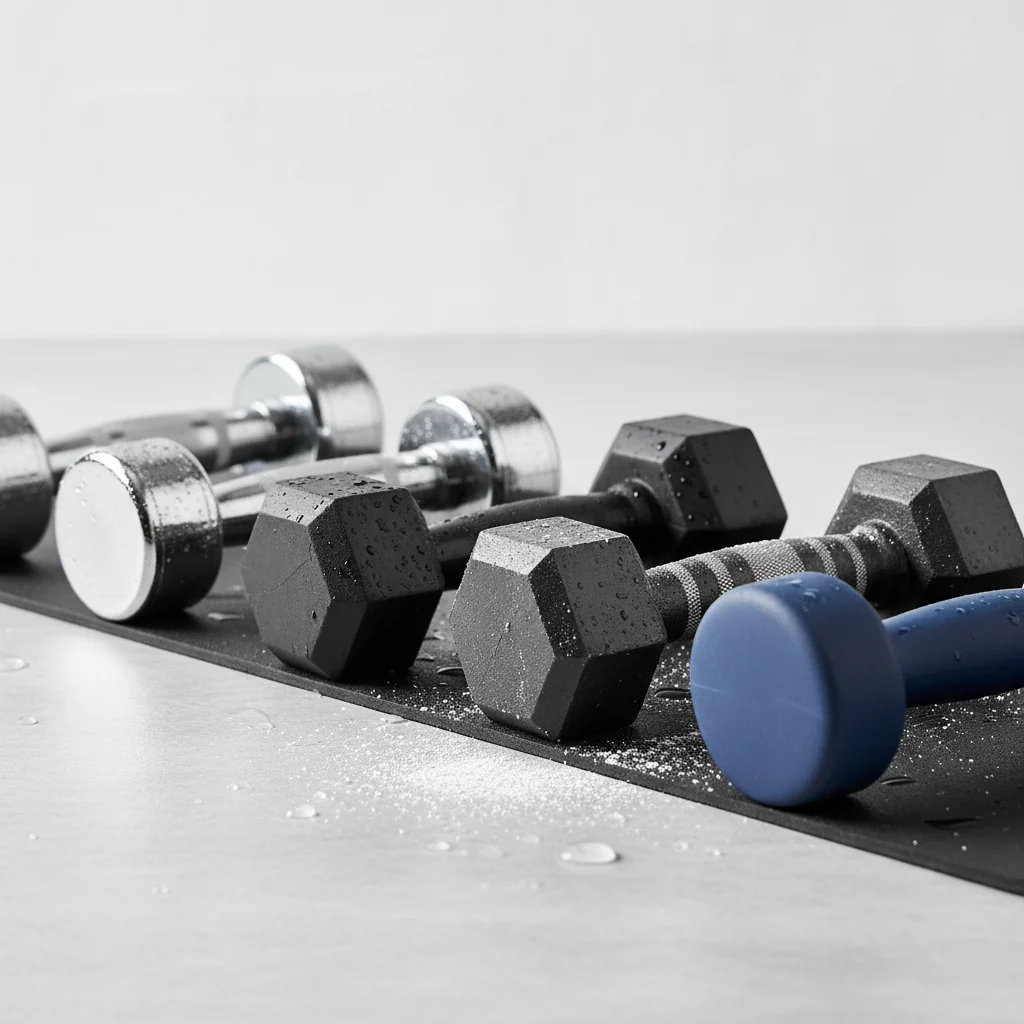
Choosing the right dumbbell set coating is crucial for maintaining a secure grip, especially when your hands get sweaty during intense workouts. While many factors contribute to grip, certain coatings inherently offer better traction. Generally, a textured urethane or rubber coating provides the most reliable grip for sweaty hands, outperforming smooth chrome or painted finishes. These materials offer a balance of durability and tactile feedback that helps prevent slippage, ensuring safer and more effective lifts.
Understanding Different Dumbbell Coatings and Their Grip Properties
Dumbbell coatings serve multiple purposes, including protecting the iron core from rust, enhancing durability, and improving aesthetics. However, their impact on grip varies significantly. Cast iron dumbbells, often left uncoated or with a thin paint layer, can become very slick with sweat. Chrome-plated dumbbells, while aesthetically pleasing and rust-resistant, tend to be extremely slippery when wet, making them less ideal for high-intensity, sweaty workouts without gloves or chalk. For best home roundups on this site.
Urethane and Rubber: The Top Contenders for Sweaty Hands
Urethane and rubber coatings are widely recognized for their superior grip, particularly in humid or sweaty conditions. Urethane, a synthetic polymer, offers excellent durability and a slightly tacky feel that enhances grip. It’s also resistant to odors and scratches. Rubber coatings, often found on hex dumbbells, provide a softer, more forgiving grip with good friction. The natural elasticity of rubber helps absorb some moisture, contributing to a more secure hold. Both materials often feature a textured surface, further improving their anti-slip properties.
- Textured Urethane: Offers a firm, slightly tacky grip with high durability and odor resistance.
- Molded Rubber: Provides a softer, more forgiving grip with good friction and impact absorption.
- Powder-Coated Steel: Can offer decent grip if the texture is rough, but less effective than urethane or rubber when very wet.
- Vinyl/Neoprene: Suitable for lighter weights, offering a soft, non-slip surface, but less common for heavy lifting.
- Bare Cast Iron (Knurled): Excellent grip when dry, but can become very slippery with sweat without chalk.
The Role of Knurling and Texture in Grip Enhancement
|
Our Picks for the Best Dumbbell Set in 2026
As an Amazon Associate I earn from qualifying purchases.
|
||
| Num | Product | Action |
|---|---|---|
| 1 | Adjustable Dumbbells Set of 2,Free Weights Dumbbells Set,Adjustable Dumbbell Set,52.5 lbs pair 105 lbs,15 in 1,for Men/Women Gym Equipment for Home Strength Training Equipment |

|
| 2 | Amazon Basics Neoprene Dumbbell Hand Weights for Exercise and Muscle Toning |
|
| 3 | Adjustable Dumbbell Set, 20/33/45/70/90lbs Free Weight Set with Connector, 4 in1 Dumbbells Set Used as Barbell, Kettlebells, Push up Stand, Weight Set for Home Gym Suitable Men/Women |
|
| 4 | Amazon Basics Neoprene Dumbbell Hand Weights for Exercise and Muscle Toning |
|
| 5 | Amazon Basics Neoprene Dumbbell Hand Weights for Exercise and Muscle Toning |
|
| 6 | Adjustable Dumbbells, 20/30/45/70/90lbs Free Weight Set with Connector,5 in1 Dumbbells Set Used as Barbell,Kettlebells,Push up Stand,Fitness Exercises for Home Gym Suitable Men/Women |
|
| 7 | PowerBlock Elite EXP Adjustable Dumbbells, Sold in Pairs, Stage 1, 5-50 lb. Dumbbells, Durable Steel Build, Innovative Workout Equipment, All-in-One Dumbbells, Expandable with Expansion Kits |
|
| 8 | CAP Barbell 150 LB Coated Hex Dumbbell Weight Set with Vertical Rack | Multiple Options |
|
| 9 | Adjustable dumbbell set,20/35/45/55/70/90lbs Free Weights set with upgraded nut, 5 in 1 Weight Set Used as Kettlebells, Barbell, Push up Stand, Fitness Exercise for Home Gym Suitable Men/Women |
|
| 10 | Fitvids Set of 6 Neoprene Dumbbell Hand Weights, Set with Rack: 2/3/5 Pairs |
|
Beyond the coating material itself, the presence and quality of knurling (the cross-hatch pattern on the handle) play a vital role in grip. Even with a less grippy coating like chrome, effective knurling can significantly improve traction. For urethane and rubber dumbbells, the texture of the coating on the bell itself can also contribute to a better grip, especially during movements where the bell might come into contact with your body. When evaluating dumbbells, always consider the combination of coating material and handle knurling.
Maintenance Tips for Optimal Grip
Regardless of the coating, proper maintenance can help preserve and even enhance your dumbbell’s grip. Regularly cleaning your dumbbells with a mild soap and water solution can remove sweat, oils, and chalk residue that might accumulate and reduce friction. For bare metal handles, a wire brush can help clear out debris from the knurling. Always ensure dumbbells are dry before storage to prevent rust and maintain their grip integrity. Consider using lifting chalk for extremely sweaty hands, as it can significantly improve traction on almost any surface.
When selecting your next set, prioritize dumbbells with a textured urethane or rubber coating, especially if you frequently experience sweaty hands during your workouts. This choice will not only enhance your grip but also contribute to a safer and more effective training experience.Investing in quality dumbbells with appropriate coatings is a long-term decision for your fitness journey.
Equipment that holds up past 60 sessions
Practical specs, not advice. Unsubscribe anytime.
