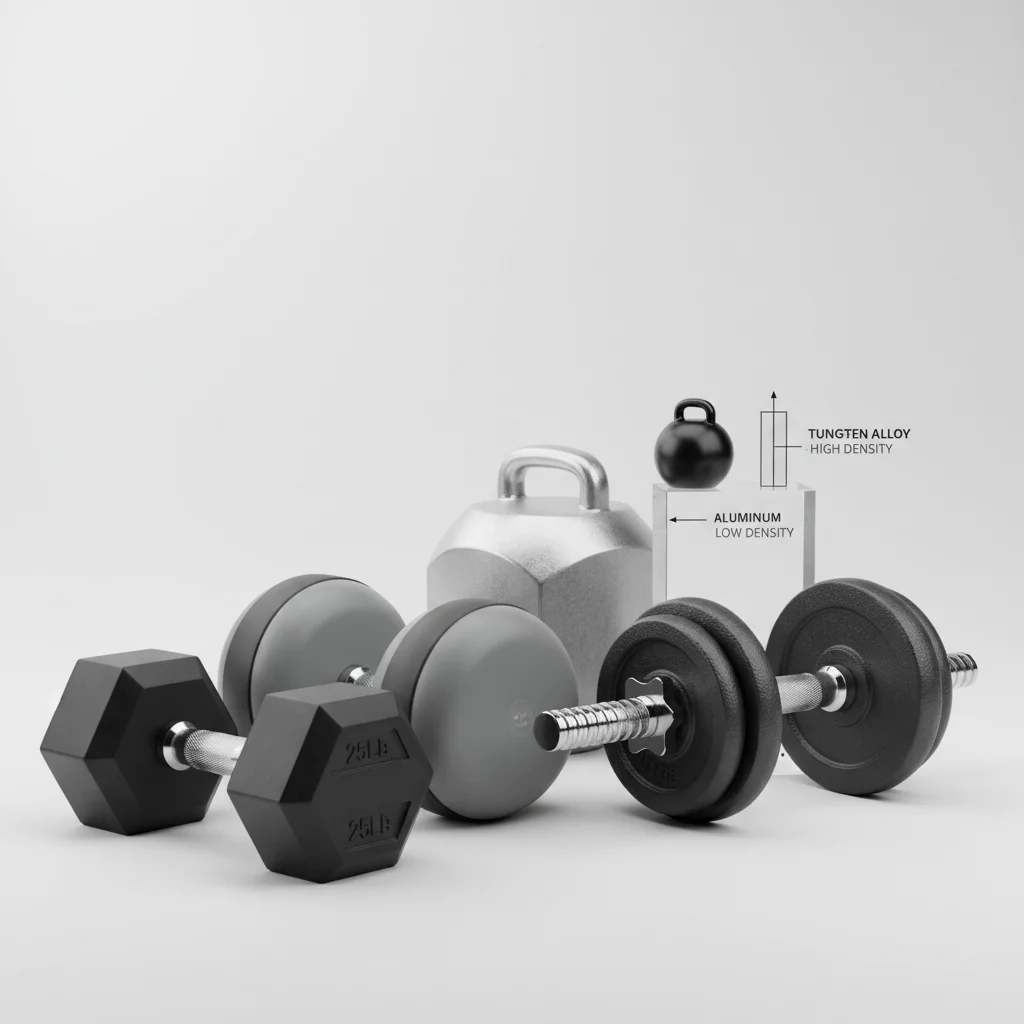
Dumbbell set material density significantly impacts performance by influencing the overall feel, durability, and even the perceived weight of the equipment. A higher density material, such as steel, allows for a more compact dumbbell at a given weight, which can be crucial for certain exercises and gym layouts. Conversely, lower density materials like cast iron or rubber require larger dimensions for the same weight, affecting grip and range of motion.
Understanding Material Density in Dumbbells
Material density refers to the mass per unit volume of the material used to construct the dumbbell. For example, steel is denser than cast iron, meaning a steel dumbbell of a specific weight will be smaller than a cast iron dumbbell of the same weight. This difference in size can affect how the dumbbell feels in your hand, its balance during lifts, and how much space it occupies in your gym. Higher density materials often lead to a more premium feel and can be more resistant to damage.
Impact on Ergonomics and Grip
The density of a dumbbell’s material directly influences its ergonomic design and how it feels in your grip. A denser material allows for a more compact weight, which can be beneficial for lifters with smaller hands or those performing exercises requiring a close grip. Conversely, a less dense material will result in a bulkier dumbbell, which might be preferred by some for a more substantial feel or for specific grip training. The balance point of the dumbbell can also shift based on material distribution and density, affecting overall lifting mechanics.
Durability and Longevity Considerations
|
Our Picks for the Best Dumbbell Set in 2026
As an Amazon Associate I earn from qualifying purchases.
|
||
| Num | Product | Action |
|---|---|---|
| 1 | CAP Barbell 150 LB Coated Hex Dumbbell Weight Set with Vertical Rack | Multiple Options |

|
| 2 | PowerBlock Elite EXP Adjustable Dumbbells, Sold in Pairs, Stage 1, 5-50 lb. Dumbbells, Durable Steel Build, Innovative Workout Equipment, All-in-One Dumbbells, Expandable with Expansion Kits |
|
| 3 | Amazon Basics Neoprene Dumbbell Hand Weights for Exercise and Muscle Toning |
|
| 4 | Adjustable dumbbell set,20/35/45/55/70/90lbs Free Weights set with upgraded nut, 5 in 1 Weight Set Used as Kettlebells, Barbell, Push up Stand, Fitness Exercise for Home Gym Suitable Men/Women |
|
| 5 | Amazon Basics Neoprene Dumbbell Hand Weights for Exercise and Muscle Toning |
|
| 6 | Fitvids Set of 6 Neoprene Dumbbell Hand Weights, Set with Rack: 2/3/5 Pairs |
|
| 7 | Adjustable Dumbbell Set, 20/33/45/70/90lbs Free Weight Set with Connector, 4 in1 Dumbbells Set Used as Barbell, Kettlebells, Push up Stand, Weight Set for Home Gym Suitable Men/Women |
|
| 8 | Adjustable Dumbbells, 20/30/45/70/90lbs Free Weight Set with Connector,5 in1 Dumbbells Set Used as Barbell,Kettlebells,Push up Stand,Fitness Exercises for Home Gym Suitable Men/Women |
|
| 9 | Adjustable Dumbbells Set of 2,Free Weights Dumbbells Set,Adjustable Dumbbell Set,52.5 lbs pair 105 lbs,15 in 1,for Men/Women Gym Equipment for Home Strength Training Equipment |
|
| 10 | Amazon Basics Neoprene Dumbbell Hand Weights for Exercise and Muscle Toning |
|
Material density often correlates with durability. Denser materials like steel or urethane tend to be more resistant to dents, chips, and general wear and tear compared to less dense materials like cast iron or rubber. This enhanced durability means a longer lifespan for your dumbbells, especially in high-traffic commercial gyms or for users who frequently drop their weights. While initial cost might be higher for denser, more durable materials, the long-term value can be significant.
- Steel: Offers superior density and durability, leading to compact and long-lasting dumbbells.
- Urethane: Provides excellent impact resistance and a premium feel, often used as a coating over steel.
- Cast Iron: A traditional, cost-effective option, but less dense and more prone to chipping than steel.
- Rubber: Often used as a coating for impact absorption, but the core material’s density is key.
- Chrome: A common finish, but the underlying material’s density dictates the dumbbell’s core properties.
Weight Accuracy and Calibration
While not directly about density, the consistency of material density across a set is crucial for weight accuracy and calibration. Manufacturers strive for uniform density to ensure that a 20-pound dumbbell is precisely 20 pounds, regardless of its specific mold or batch. Inconsistent density can lead to slight weight discrepancies, which, while minor for casual lifters, can impact progressive overload and symmetry for serious athletes. Always check for reputable brands that prioritize quality control in their manufacturing processes.
Choosing the Right Density for Your Needs
When selecting a dumbbell set, consider how material density aligns with your training goals and preferences. If space is a premium or you prefer a more compact feel, higher density materials are ideal. For those on a budget, cast iron offers a good balance, though with larger dimensions. The choice ultimately depends on your priorities for durability, ergonomics, and investment.Many premium sets utilize high-density steel cores with durable urethane coatings for the best of both worlds.
Ultimately, understanding dumbbell set material density empowers you to make an informed decision that supports your fitness journey. It’s not just about the weight number, but how that weight is physically presented and how it interacts with your body during exercise. Investing in dumbbells with appropriate material density ensures a comfortable, effective, and long-lasting workout experience.Always compare specifications and read reviews to find the perfect match for your home or commercial gym.
Equipment that holds up past 60 sessions
Practical specs, not advice. Unsubscribe anytime.
