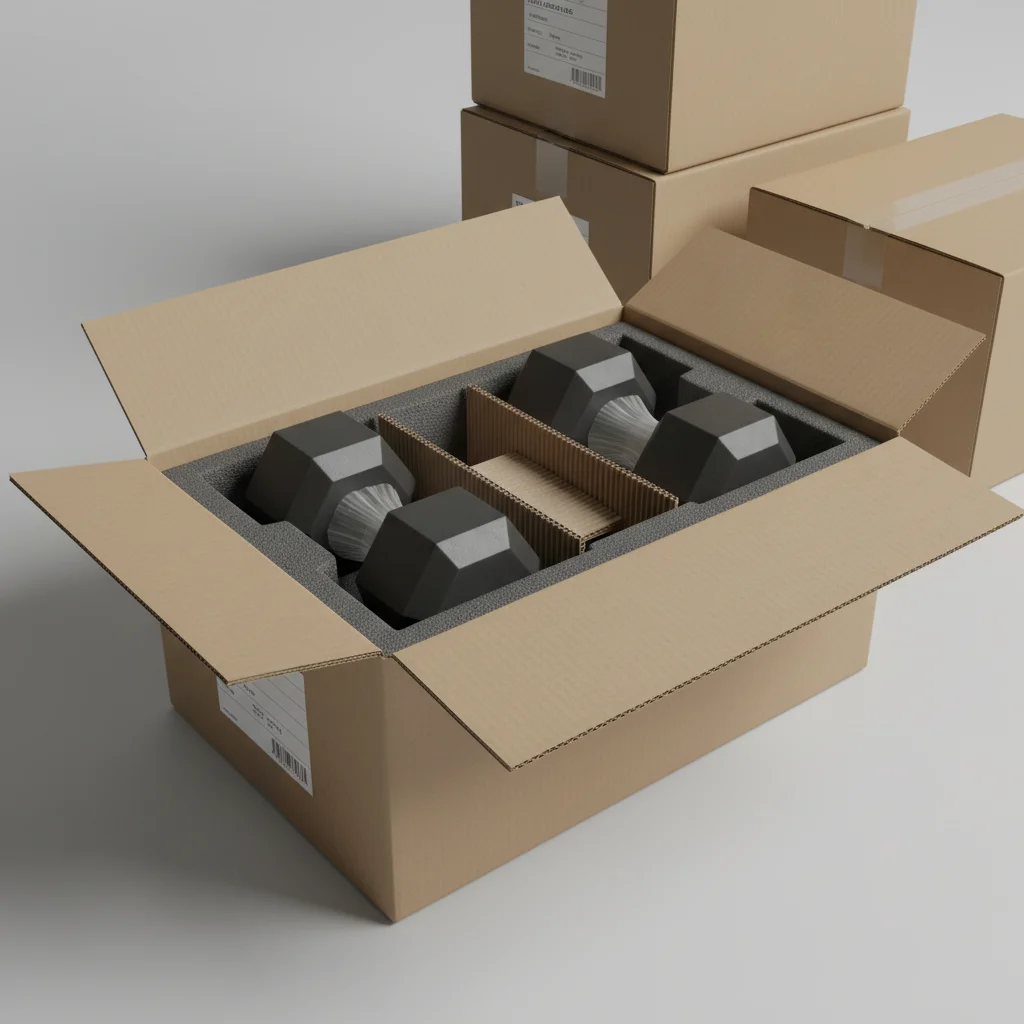
Dumbbell set packaging is crucial for ensuring your equipment arrives in pristine condition, protecting against damage during transit. Manufacturers employ a variety of methods, often combining several techniques, to safeguard these heavy and sometimes fragile items. The most common approaches involve robust outer cartons, internal cushioning, and secure strapping, all designed to absorb impacts and prevent shifting.
The Importance of Robust Outer Cartons
The first line of defense for any dumbbell set is the outer carton. These are typically made from heavy-duty corrugated cardboard, often with multiple layers for enhanced strength. For heavier sets, double- or triple-wall corrugated boxes are standard, providing superior crush resistance. The size of the carton is also critical; it should be snug enough to prevent excessive movement of the contents but not so tight that it stresses the material. Some manufacturers also use reinforced corners or specialized coatings on the cardboard to resist moisture and punctures.
Internal Cushioning and Void Fill Strategies
Inside the outer carton, various cushioning materials are used to absorb shock and fill empty spaces. Expanded polystyrene (EPS) foam, often custom-molded to the shape of the dumbbells, is a popular choice for its excellent shock absorption properties. Polyethylene (PE) foam is another option, offering good cushioning and resistance to compression. For smaller or irregularly shaped dumbbells, foam peanuts or air pillows might be used as void fill, though these are less common for very heavy items due to potential shifting. The goal is to create a protective cocoon that prevents metal-on-metal contact and minimizes impact forces.
Securing Components with Strapping and Wraps
|
Our Picks for the Best Dumbbell Set in 2026
As an Amazon Associate I earn from qualifying purchases.
|
||
| Num | Product | Action |
|---|---|---|
| 1 | Amazon Basics Neoprene Dumbbell Hand Weights for Exercise and Muscle Toning |

|
| 2 | Fitvids Set of 6 Neoprene Dumbbell Hand Weights, Set with Rack: 2/3/5 Pairs |
|
| 3 | Adjustable Dumbbells Set of 2,Free Weights Dumbbells Set,Adjustable Dumbbell Set,52.5 lbs pair 105 lbs,15 in 1,for Men/Women Gym Equipment for Home Strength Training Equipment |
|
| 4 | Adjustable dumbbell set,20/35/45/55/70/90lbs Free Weights set with upgraded nut, 5 in 1 Weight Set Used as Kettlebells, Barbell, Push up Stand, Fitness Exercise for Home Gym Suitable Men/Women |
|
| 5 | Adjustable Dumbbells, 20/30/45/70/90lbs Free Weight Set with Connector,5 in1 Dumbbells Set Used as Barbell,Kettlebells,Push up Stand,Fitness Exercises for Home Gym Suitable Men/Women |
|
| 6 | Amazon Basics Neoprene Dumbbell Hand Weights for Exercise and Muscle Toning |
|
| 7 | Adjustable Dumbbell Set, 20/33/45/70/90lbs Free Weight Set with Connector, 4 in1 Dumbbells Set Used as Barbell, Kettlebells, Push up Stand, Weight Set for Home Gym Suitable Men/Women |
|
| 8 | CAP Barbell 150 LB Coated Hex Dumbbell Weight Set with Vertical Rack | Multiple Options |
|
| 9 | PowerBlock Elite EXP Adjustable Dumbbells, Sold in Pairs, Stage 1, 5-50 lb. Dumbbells, Durable Steel Build, Innovative Workout Equipment, All-in-One Dumbbells, Expandable with Expansion Kits |
|
| 10 | Amazon Basics Neoprene Dumbbell Hand Weights for Exercise and Muscle Toning |
|
Beyond cushioning, securing individual dumbbells and components within the package is vital. Heavy-duty plastic or metal strapping is frequently used to bundle multiple dumbbells together or to secure them to a base within the carton. This prevents them from shifting and potentially breaking through the packaging. For adjustable dumbbell sets, individual plates and mechanisms are often wrapped in protective film, bubble wrap, or thin foam sheets to prevent scratches and dings. Some manufacturers also use internal cardboard dividers or trays to keep components separated and organized.
Special Considerations for Different Dumbbell Types
The packaging approach often varies depending on the type of dumbbell. Cast iron dumbbells, while durable, can chip or scratch, so they often receive individual wrapping and robust foam inserts. Rubber or urethane coated dumbbells are less prone to chipping but still require protection against cuts or abrasions, often achieved with foam sheets or individual plastic bags. Adjustable dumbbells, with their intricate mechanisms, demand the most meticulous packaging, often featuring custom-molded foam for each component to ensure proper alignment and prevent damage to moving parts. The weight of the set also dictates the strength of the packaging materials used, with heavier sets requiring more substantial protection.
Ensuring Safe Delivery: Palletization and Handling Labels
For larger and heavier dumbbell sets, especially those shipped in bulk or to commercial gyms, palletization is a common practice. The packaged dumbbells are securely stacked on a wooden pallet and then shrink-wrapped or strapped to the pallet to prevent movement during freight. Clear handling labels are also essential, indicating
Equipment that holds up past 60 sessions
Practical specs, not advice. Unsubscribe anytime.
