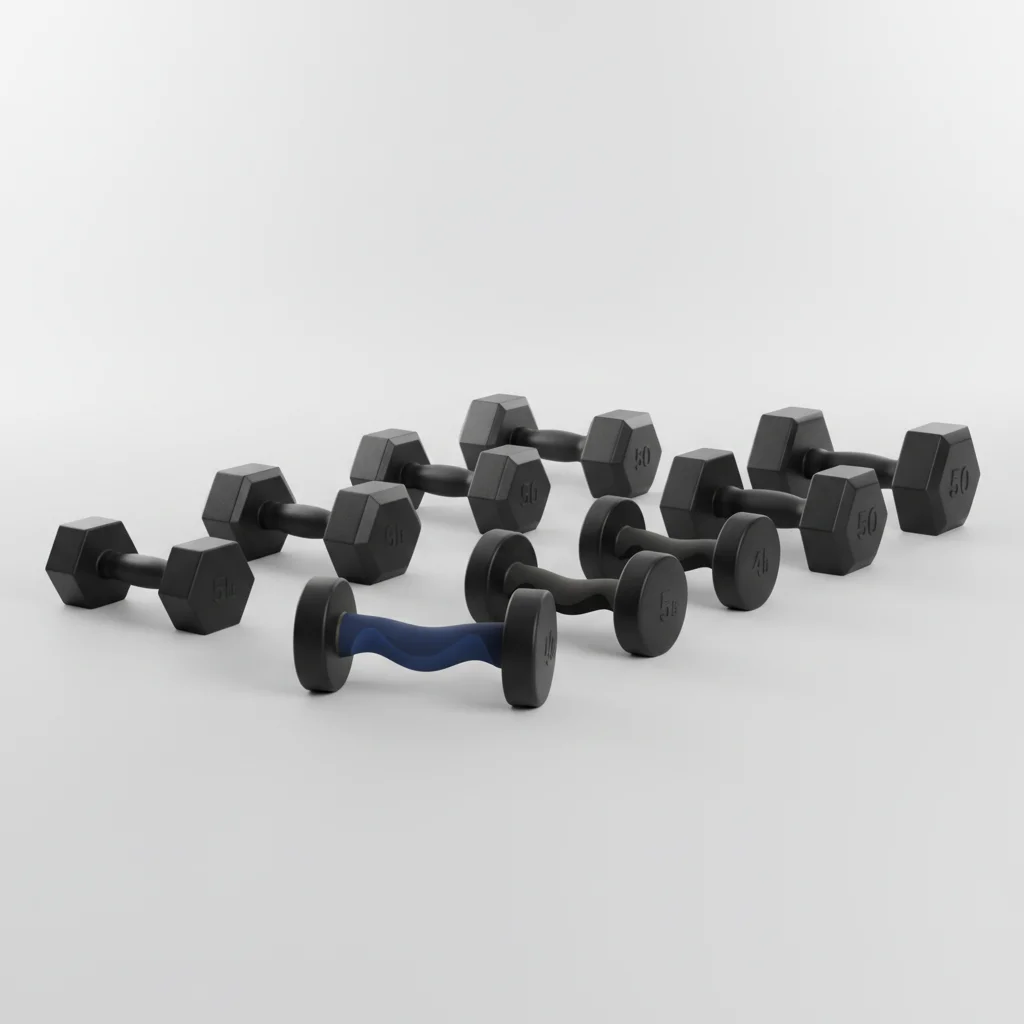
Dumbbell set contouring, often overlooked, significantly impacts grip comfort and workout effectiveness. Ergonomic contouring, particularly in the handle design, can reduce hand fatigue, prevent calluses, and improve overall control during lifts. This attention to shape and form ensures a more natural fit for the human hand, leading to safer and more productive training sessions.
Understanding Dumbbell Handle Contours
Dumbbell handles aren’t all created equal. While many feature a straight, cylindrical design, contoured handles are specifically shaped to fit the natural curve of the palm and fingers. This can involve subtle indentations, a slight taper, or even a more pronounced ergonomic curve. The goal is to distribute pressure evenly across the hand, minimizing stress points that can lead to discomfort or injury over time. Different manufacturers employ various contouring techniques, each aiming to optimize the user’s interaction with the weight. For more home guides on this site.
The material and finish of the contoured handle also play a crucial role. A well-contoured handle made from a smooth yet grippy material will provide superior comfort and security compared to a poorly contoured or overly abrasive surface. Consider how the contour integrates with the knurling or other grip-enhancing features to create a truly effective and comfortable hold.
Benefits of Ergonomic Contouring for Lifters
The primary benefit of ergonomically contoured dumbbell handles is enhanced comfort, which directly translates to improved performance. When your grip feels natural and secure, you can focus more on the muscle being worked rather than the discomfort in your hands. This can lead to better form, increased reps, and ultimately, greater strength gains. Furthermore, reduced hand fatigue means you can sustain your workout for longer periods without needing to rest your grip.
Beyond comfort, ergonomic contouring can also help prevent common lifting-related issues such as calluses, blisters, and even carpal tunnel syndrome in some cases. By promoting a more natural hand position, it reduces the strain on joints and tendons. This is particularly important for individuals who train frequently or lift heavy weights, where cumulative stress can become a significant problem.
Choosing the Right Contouring for Your Hands
|
Our Picks for the Best Dumbbell Set in 2026
As an Amazon Associate I earn from qualifying purchases.
|
||
| Num | Product | Action |
|---|---|---|
| 1 | CAP Barbell 150 LB Coated Hex Dumbbell Weight Set with Vertical Rack | Multiple Options |

|
| 2 | Amazon Basics Neoprene Dumbbell Hand Weights for Exercise and Muscle Toning |
|
| 3 | Adjustable Dumbbell Set, 20/33/45/70/90lbs Free Weight Set with Connector, 4 in1 Dumbbells Set Used as Barbell, Kettlebells, Push up Stand, Weight Set for Home Gym Suitable Men/Women |
|
| 4 | Amazon Basics Neoprene Dumbbell Hand Weights for Exercise and Muscle Toning |
|
| 5 | Adjustable dumbbell set,20/35/45/55/70/90lbs Free Weights set with upgraded nut, 5 in 1 Weight Set Used as Kettlebells, Barbell, Push up Stand, Fitness Exercise for Home Gym Suitable Men/Women |
|
| 6 | Amazon Basics Neoprene Dumbbell Hand Weights for Exercise and Muscle Toning |
|
| 7 | Fitvids Set of 6 Neoprene Dumbbell Hand Weights, Set with Rack: 2/3/5 Pairs |
|
| 8 | PowerBlock Elite EXP Adjustable Dumbbells, Sold in Pairs, Stage 1, 5-50 lb. Dumbbells, Durable Steel Build, Innovative Workout Equipment, All-in-One Dumbbells, Expandable with Expansion Kits |
|
| 9 | Adjustable Dumbbells, 20/30/45/70/90lbs Free Weight Set with Connector,5 in1 Dumbbells Set Used as Barbell,Kettlebells,Push up Stand,Fitness Exercises for Home Gym Suitable Men/Women |
|
| 10 | Adjustable Dumbbells Set of 2,Free Weights Dumbbells Set,Adjustable Dumbbell Set,52.5 lbs pair 105 lbs,15 in 1,for Men/Women Gym Equipment for Home Strength Training Equipment |
|
Selecting the ideal dumbbell set contouring depends largely on individual hand size and personal preference. What feels comfortable for one person might not for another. It’s advisable to try out different types of dumbbells if possible before making a purchase. Look for handles that allow your fingers to wrap naturally around the grip without excessive squeezing or stretching. Some people prefer a more subtle contour, while others benefit from a more pronounced ergonomic shape.
Consider the type of exercises you’ll be performing. For movements requiring a very firm, static grip, a more aggressive contour might be beneficial. For dynamic movements where the dumbbell shifts in your hand, a smoother, less restrictive contour might be preferred. Ultimately, the best contour is one that feels like an extension of your hand, providing control without causing strain.
Impact on Workout Performance and Safety
The impact of proper dumbbell set contouring on workout performance and safety cannot be overstated. A secure and comfortable grip allows for better control of the weight, reducing the risk of accidental drops and potential injuries. When you’re not constantly adjusting your grip or battling discomfort, you can maintain better form throughout your sets, targeting the intended muscles more effectively.
This improved control also contributes to greater confidence during lifts, especially when pushing heavier weights. Knowing that your grip is solid frees you to focus on the movement itself, leading to more efficient and productive training sessions. Investing in dumbbells with well-designed contours is an investment in your long-term lifting success and safety.
- Reduces hand fatigue during prolonged workouts.
- Minimizes the formation of calluses and blisters.
- Enhances grip security for safer lifting.
- Promotes better lifting form and muscle activation.
- Increases overall comfort, encouraging consistent training.
Maintaining Your Contoured Dumbbells
Even with the best contouring, proper maintenance is key to ensuring the longevity and continued comfort of your dumbbells. Regularly clean the handles to remove sweat, chalk, and debris, which can accumulate in the contours and affect grip. For metal handles, consider using a wire brush for knurling and a damp cloth for the contoured surfaces. For rubber or urethane handles, a mild soap and water solution is usually sufficient.
Inspect the handles periodically for any signs of wear or damage, such as cracks in rubber coatings or excessive rust on metal. Addressing these issues promptly can prevent further deterioration and maintain the ergonomic integrity of the dumbbell. Proper storage in a rack also helps protect the handles from unnecessary impact and wear.By taking these simple steps, you can ensure your contoured dumbbells remain a comfortable and effective tool in your fitness arsenal for years to come.
Equipment that holds up past 60 sessions
Practical specs, not advice. Unsubscribe anytime.
