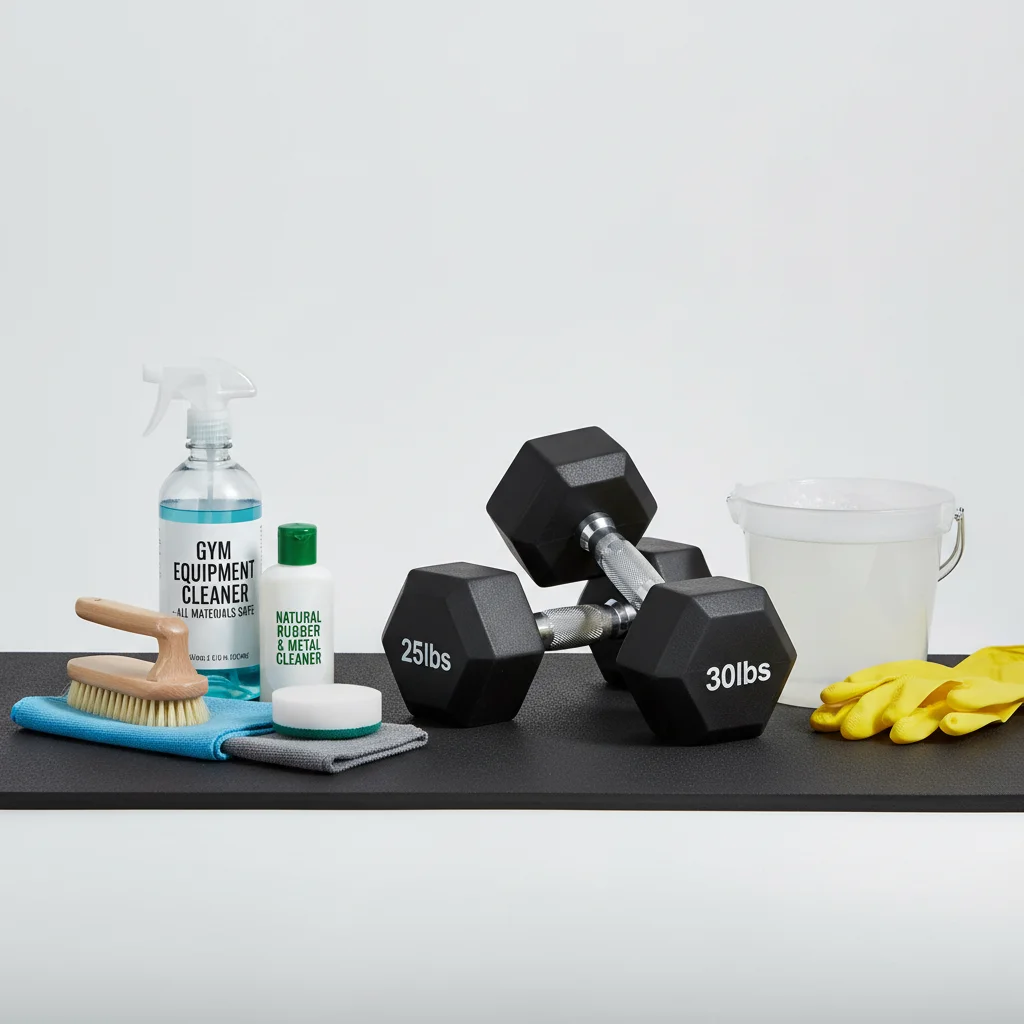
Choosing the right cleaning solutions for your dumbbell set is crucial for maintaining their longevity and appearance. For most common dumbbell materials like cast iron, rubber, urethane, and chrome, a mild soap and water solution is the safest and most effective option. This gentle approach prevents damage to coatings, finishes, and the underlying material, ensuring your equipment remains in top condition for years of use.
Understanding Different Dumbbell Materials and Their Needs
Different dumbbell materials react differently to various cleaning agents. Cast iron, while durable, is prone to rust if exposed to harsh chemicals or left wet. Rubber and urethane coatings are generally resilient but can degrade or become sticky with petroleum-based cleaners or strong solvents. Chrome and other plated finishes require non-abrasive solutions to prevent scratching and maintain their shine. Understanding these nuances helps in selecting a cleaning method that preserves your investment.
The Universal Solution: Mild Soap and Water
For a vast majority of dumbbell sets, a simple mixture of mild dish soap and warm water is your best bet. This solution effectively removes sweat, grime, and light dirt without stripping protective coatings or causing discoloration. Use a soft cloth or sponge to wipe down the dumbbells, ensuring you reach all crevices and knurling. After cleaning, it’s imperative to thoroughly dry the dumbbells to prevent rust, especially on cast iron or steel components. A microfiber towel works well for this purpose, absorbing moisture efficiently.
- Mix a few drops of mild dish soap with warm water in a spray bottle or bucket.
- Spray or wipe the solution onto the dumbbell surfaces.
- Use a soft brush (like a toothbrush for knurling) or cloth to scrub away dirt.
- Rinse thoroughly with a clean, damp cloth to remove all soap residue.
- Dry immediately and completely with a clean, dry towel to prevent rust.
When to Consider Specialized Cleaners
|
Our Picks for the Best Dumbbell Set in 2026
As an Amazon Associate I earn from qualifying purchases.
|
||
| Num | Product | Action |
|---|---|---|
| 1 | Adjustable dumbbell set,20/35/45/55/70/90lbs Free Weights set with upgraded nut, 5 in 1 Weight Set Used as Kettlebells, Barbell, Push up Stand, Fitness Exercise for Home Gym Suitable Men/Women |

|
| 2 | Adjustable Dumbbells Set of 2,Free Weights Dumbbells Set,Adjustable Dumbbell Set,52.5 lbs pair 105 lbs,15 in 1,for Men/Women Gym Equipment for Home Strength Training Equipment |
|
| 3 | Amazon Basics Neoprene Dumbbell Hand Weights for Exercise and Muscle Toning |
|
| 4 | CAP Barbell 150 LB Coated Hex Dumbbell Weight Set with Vertical Rack | Multiple Options |
|
| 5 | Amazon Basics Neoprene Dumbbell Hand Weights for Exercise and Muscle Toning |
|
| 6 | PowerBlock Elite EXP Adjustable Dumbbells, Sold in Pairs, Stage 1, 5-50 lb. Dumbbells, Durable Steel Build, Innovative Workout Equipment, All-in-One Dumbbells, Expandable with Expansion Kits |
|
| 7 | Adjustable Dumbbell Set, 20/33/45/70/90lbs Free Weight Set with Connector, 4 in1 Dumbbells Set Used as Barbell, Kettlebells, Push up Stand, Weight Set for Home Gym Suitable Men/Women |
|
| 8 | Amazon Basics Neoprene Dumbbell Hand Weights for Exercise and Muscle Toning |
|
| 9 | Fitvids Set of 6 Neoprene Dumbbell Hand Weights, Set with Rack: 2/3/5 Pairs |
|
| 10 | Adjustable Dumbbells, 20/30/45/70/90lbs Free Weight Set with Connector,5 in1 Dumbbells Set Used as Barbell,Kettlebells,Push up Stand,Fitness Exercises for Home Gym Suitable Men/Women |
|
While mild soap and water are generally sufficient, there are instances where specialized cleaners might be beneficial. For stubborn rust on cast iron dumbbells, a rust remover specifically designed for metal can be used, but always follow the product instructions carefully and re-oil the dumbbells afterward. For rubber dumbbells that have developed a sticky residue, a diluted rubbing alcohol solution can sometimes help, but test it on an inconspicuous area first. Avoid harsh industrial cleaners, bleach, or abrasive pads, as these can cause irreversible damage to your dumbbells.
Maintaining Longevity Through Regular Cleaning
Regular cleaning is not just about aesthetics; it’s a critical part of dumbbell maintenance that extends their lifespan. Sweat contains salts and acids that can corrode metal and degrade rubber over time. Wiping down your dumbbells after each use with a damp cloth, followed by a dry one, can significantly reduce the need for deep cleaning and prevent the buildup of grime. This simple habit, combined with occasional thorough cleaning, will keep your dumbbell set in excellent condition. For a comprehensive cleaning kit, consider thewhich includes gentle cleaners and drying cloths. If you’re looking for a durable set that’s easy to clean, theis a great option.
Equipment that holds up past 60 sessions
Practical specs, not advice. Unsubscribe anytime.
